Piece from Masha Gessen on the nature of college: New Yorker
What is the Supreme Court going to do with this case?
Caitlin Flanagan’s Commencement Address

Piece from Masha Gessen on the nature of college: New Yorker
What is the Supreme Court going to do with this case?
Caitlin Flanagan’s Commencement Address
This piece on Dutch Journals from WWII: Must share with students as they create their own COVID-19 journals.
A common sense piece on “hey, I already had the coronavirus.”
Steven Johnson on the London Cholera Epidemic, which I excerpted as a discussion starter for my students:
“This is one of the ways that disease, and particularly epidemic disease, plays havoc with traditional histories. Most world-historic events — great military battles, political revolutions — are self-consciously historic to the participants living through them. They act knowing that their decisions will be chronicled and dissected for centuries to come. But epidemics create a kind of history from below: they can be world-changing, but the participants are almost inevitably ordinary folk, following their established routines, not thinking for a second about how their actions will be recorded for posterity. And of course, if they do recognize that they are living through a historical crisis, it’s often too late — because, like it or not, the primary way that ordinary people create this distinct genre of history is by dying.”
As you create your own documentation around this crisis, what do you think of Professor Johnson’s argument? Does it still hold in the 21st century, when we are so connected and when there’s plenty of sources of information?
Ibram X. Kendi, The Other Swing Voter
Christina Rizga, What it’s like to teach at one of America’s least racially integrated schools
Here’s a grim essay from Natalia Ginzburg. Found through this New Yorker collection (have to find link later).
How’s this for uplifting?
There is a kind of uniform monotony in the fate of man. Our lives unfold according to ancient, unchangeable laws, according to an invariable and ancient rhythm. Our dreams are never realized and as soon as we see them betrayed we realize that the intensest joys of our life have nothing to do with reality. No sooner do we see them betrayed than we are consumed with regret for the time when they glowed within us. And in this succession of hopes and regrets our life slips by.
I’m struggling with endless scrolling through Twitter and Instagram. With endless links. I’m going to try and stop that by keeping track of what I read today.
David Blight, Op-ed on voter suppression in today’s NYT
Zadie Smith, The American Exception
Cool piece from the New Yorker, here.
This paragraph is awesome:
But humanism is exactly why, in my view, a classroom with human bodies in it, struggling over the meaning of a short story, works. Because the literary arts are not the same as the study of economics or astrophysics. The literary arts are about emotions and human consciousness, and so the instruction can’t be converted into data points. The literary arts are more about a human in the room feeling something, expressing it, and the other humans listening, and, ideally, feeling similarly. Such is the invention of compassion. Our instruction is not only about dispensing information; it is also about bearing witness, grappling with the complexities of another.
If you replace “short story” with history or urban studies, this paragraph still holds.
One on photography during this time.
One on reading and appreciating Shakespeare during this time.
One obituary that makes me thing I should use this time to walk all of the blocks of Philadelphia. Easier now, with runkeeper and other apps as I could create maps each time. Hmmmm…
Who will make this moment for our leaders?
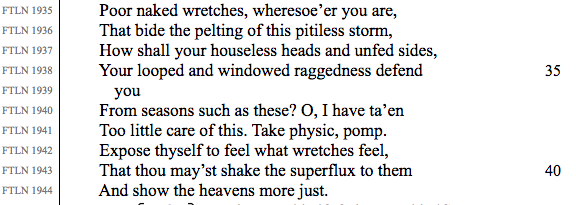
From Act 3, Scene 4:
Excellent work here on how different measures will affect the spread of the virus.
Here the NYT version. Also good.
I finished Meghan Daum’s book The Problem with Everything yesterday. One of her major points was that we stop trying to deal with complicated issues via social media. To stop, to think, to reflect, to talk, to deliberate instead of trying to capture things in 140 characters.
I think this response to the 1619 Project represents what should happen. There’s heat and pushback to any major project. So write about it. Then wait and read a thoughtful response.
Here’s another overview from The Atlantic.
We read These Truths and I’m glad we did. I’m wondering if next year I might start the year with the 1619 project. And I’m wondering how I might use this debate as an endpoint for my These Truths project.


