Category Archives: Teaching 2016_2017

Pre-test ritual

Sitting down to take part two of the MAP test — Reading — I ran circle by remembering times that they read well, closely, and with purpose. Once we’d come up with examples, the students set growth goals for themselves.

Some of the answers:

“I know that if you’re doing a project and you need to do research you will be reading with a purpose, which I have done a lot of.” –SH

*Long, long list of projects done.

* “Every project I’ve done I had to read with a purpose. That purpose was to get more insight on the true nature of the project.” –IJ

* For Gateway, I had to read the directions closely.” –AH


This was an activity that made me feel good about our place and hopeful for our students. It also helped alleviate the existential dread I feel when I’m charged with delivering a standardized test. They’ve done some amazing things that demonstrate authentic and deep literary practices.
Old friend

I like rereading this every semester.

I believe that much of present education fails because it neglects this fundamental principle of the school as a form of community life. It conceives the school as a place where certain information is to be given, where certain lessons are to be learned, or where certain habits are to be formed. The value of these is conceived as lying largely in the remote future; the child must do these things for the sake of something else he is to do; they are mere preparation. As a result they do not become a part of the life experience of the child and so are not truly educative.

Dewey, John. “My Pedagogic Creed.” School Journal 54 (1897): 77–80.

Day one: growth vs. proficiency

We’re doing the MAP tests on Thursday and Friday morning. This test addresses academic growth. It seemed as good a time as any to address this idea of which is more important, growth or proficiency? It’s a false choice, really, everyone wants both. But if you had to pick one, which would you pick?

Brief summary of the conversation points.

DD: Everybody can’t reach proficient.

TC: Sometimes it’s not good enough for society’s standards. A school or a job might say “if you can’t show proficiency what makes you good enough to be in our place?”

KM: Growth shows that you’re putting in your work, even if it’s not proficient.

VG: It’s more meaningful to show growth. Proficiency is important depending on who is looking at you.

DW: The real world doesn’t really care about how much you grow.

MH: Once you reach a certain level, it has to be about proficiency. Growth is always happening but proficiency feels stagnant.

CB: Even if you don’t succeed (reach proficiency), you’re doing better than you did before.

DW: You can’t be okay with failing.

IK: If you show effort, that’s still something.

SH: If you have growth, you’ll eventually get to proficient.


I’ll answer this differently depending on the day, but this morning I was feeling proficiency. Yeah, I want you to grow, but I want you to have achieved something, not just have gotten better. Tomorrow I’ll feel differently.


Tomorrow we’ll talk about growth vs. proficiency as an athlete, a mechanic, a designer, a human being. Does this argument shift depending on the context? In other words, I don’t want a plumber who’s growing into their practice, I want the pipe not to leak. We’re also going to look at how the current Secretary of Ed handled this question…

Throwaway comment

You sit in classrooms and carefully listen and there’s all manner of comments made by students. When you had an observer, particularly early in your career, you’d learn that you had to stay true to whatever culture you’d built, as the kids would ruthlessly call you out.

“And for homework…”

“Homework? We never have homework!”

But on Friday, we were having a conversation, and as I was facilitating the same old “why are we doing this” discussion, I heard a young man say, mostly under his breath:

“Can’t just do a project for no reason.”

Something is working, I think, if we’ve managed to establish that all project work has a purpose, a clear intention, a reason for doing it beyond a grade.

Predictors vs. Fate

After a mid-Atlantic weather event, we restarted our conversation on destiny and got back to where I wanted to be from the beginning: what are the predictors of success? I think reflecting on the nature of success, how we earn it, how we make it happen for ourselves, helps to lay the foundation for changing when it gets difficult.

We did it in two parts: what do they see as the predictors of success for the Gateway project and what do they see as the predictors of success for college students? And of course we did it as drawings.

Untitled

Untitled

Untitled

Concluding comment from AH: “Your mindset produces your fate”

Best joke of the day:
Student one asks, “how did you meet your wife?”
Student two responds: caucasiansmeet.com

Two more questions

I often ask my students how they want to be known. It’s a helpful question.

Yesterday one of my brilliant peers built his staff portfolio around a quote from August Wilson:

“Now don’t you go through life worrying about whether somebody like you or not! You best be makin’ sure that they’re doin’ right by you! You understand what I’m sayin’?”

(I don’t have the script in front of me; this is from the interwebs, will check accuracy later)

The inquiry I highlighted in the middle, “am I doing right by people ?”, is one I think I’ll start using in student conversations. How is our community doing right by you? How am I doing right by you? How am I falling down?” What does it mean if we’re trying to right by you?

Two, and this is from a memoir I deeply appreciated, Mark Slouka’s Nobody’s Son:

“What’s the takeaway?” my neighbor’s always asking his kids whenever they run into something harder than they are.

I love Slouka’s writing — ordered all of his novels from the Free Library once I finished this book but this inquiry — what’s the takeaway — will become another question I hope to start asking regularly. It’s much better than “what have we learned?” or “what will you do differently?”

Day two: Destiny/fate/luck

True or false: luck is the biggest factor in one’s fate.

MB: Karma is a bigger factor because you have to do things for good or bad things to happen to you.

TC: I don’t believe luck has anything to do with fate. I believe that luck is something people make up in order to feel better. Or like a crutch of some sort.

SH: Luck comes when it’s most needed or it comes when it just happens. Or life can cut you a break and throw it at you sometimes.

DD: I feel like finding things, getting money, etc., isn’t luck. It’s life.

AM: This is true because every one that is successful says that they got lucky.

KM: “No, I’m not lucky. I’m blessed.” ~Nicki Minaj

AH: Luck can’t matter when you work hard and do everything you need to ensure you’ll be successful.

IP: True because you could be lucky enough to have been born into a rich/famous family and because of that your life could be all downhill, but you could also have been born homeless and no one would ever hear your voice or know your name.

Finding our way to outstanding

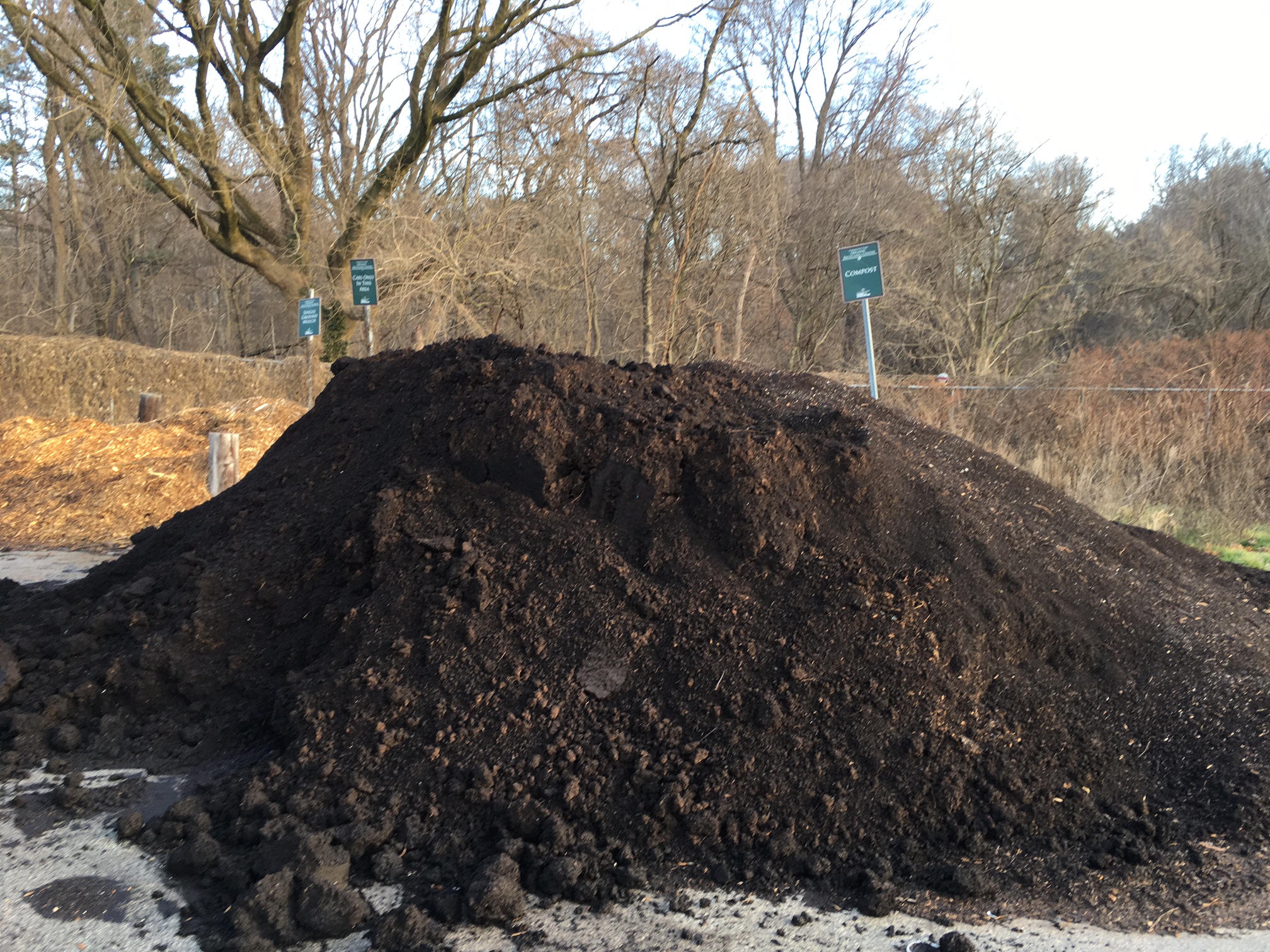
Near the beginning of every project, I go through the process of asking students to think about what makes outstanding work. There are lots of reasons for this: it helps give them something to aim for, it helps them consider how they might best use their time, it helps them understand what makes quality work, and, well, it helps me write a rubric, which is pretty much the second work task any teacher has to do. In this case, it was writing a rubric for English, math, and science content based on an upcoming deliverable: a brochure presenting the case for compost along three axes: mathematically, environmentally, and convenience. In other words, how do we convince people to compost based on arguments in those areas?

The kids were crazy – Monday + two hours doing bureaucracy – but still managed to generate a pretty awesome rubric. More evidence that we’re making progress.

English
If someone reading it wants to make compost.
Explains the science behind it all clearly.
Makes it so everyone can comprehend it and makes it appealing to the reader.
If the ideas about argument made about compost are clear and compelling.
Effective, persuasive, and real structure.

Math
The math terms are understandable and equations make sense.
Carefully explains how things can get composted with math; everything adds up and makes sense; they can use the math in their design.
If the measurements of each component are thoughtfully explained along with various ratios.
If the math is backed up in words to make it easier to understand.
There are visuals to help explain the math.
Easily understandable concepts that focus on the way you explain things in your work.
If the numbers presented are chosen carefully, explained well, and the equation is demonstrated in a convincing way.

Social Studies
If you have evidence to make your case.
IF the evidence is synthesized from multiple sources, shows a deep understanding, and clearly helps the argument.
If you have lots of evidence to back up your work.