Category Archives: Teaching 2017_2018

The best and the brightest

Monday’s circle began, as it always does, with a weekend update — what did you get up to this weekend — and a second question: what did you do to compete with the best and brightest? I prefaced this by talking about the potential I see in all of them and how I want them to someday be their best selves.

I wanted to highlight the fact that they are competing against children who spend far more time reading, writing, and thinking about their schoolwork. This is a hard one to do in circle: I didn’t want to produce automatic adolescent us vs. them stuff but I also didn’t want anyone believing that they’ve made it already. The intense, relationship based culture of our school allows us to see the immense potential of all students. Potential is just potential, though, and nothing’s sadder than when it goes unrealized.

It’s about creating the situation where you realize you need to work harder.

(Also, I’ve not forgotten how the so-called best and the brightest made a hash out of a war. )
Transfer: one skill to another

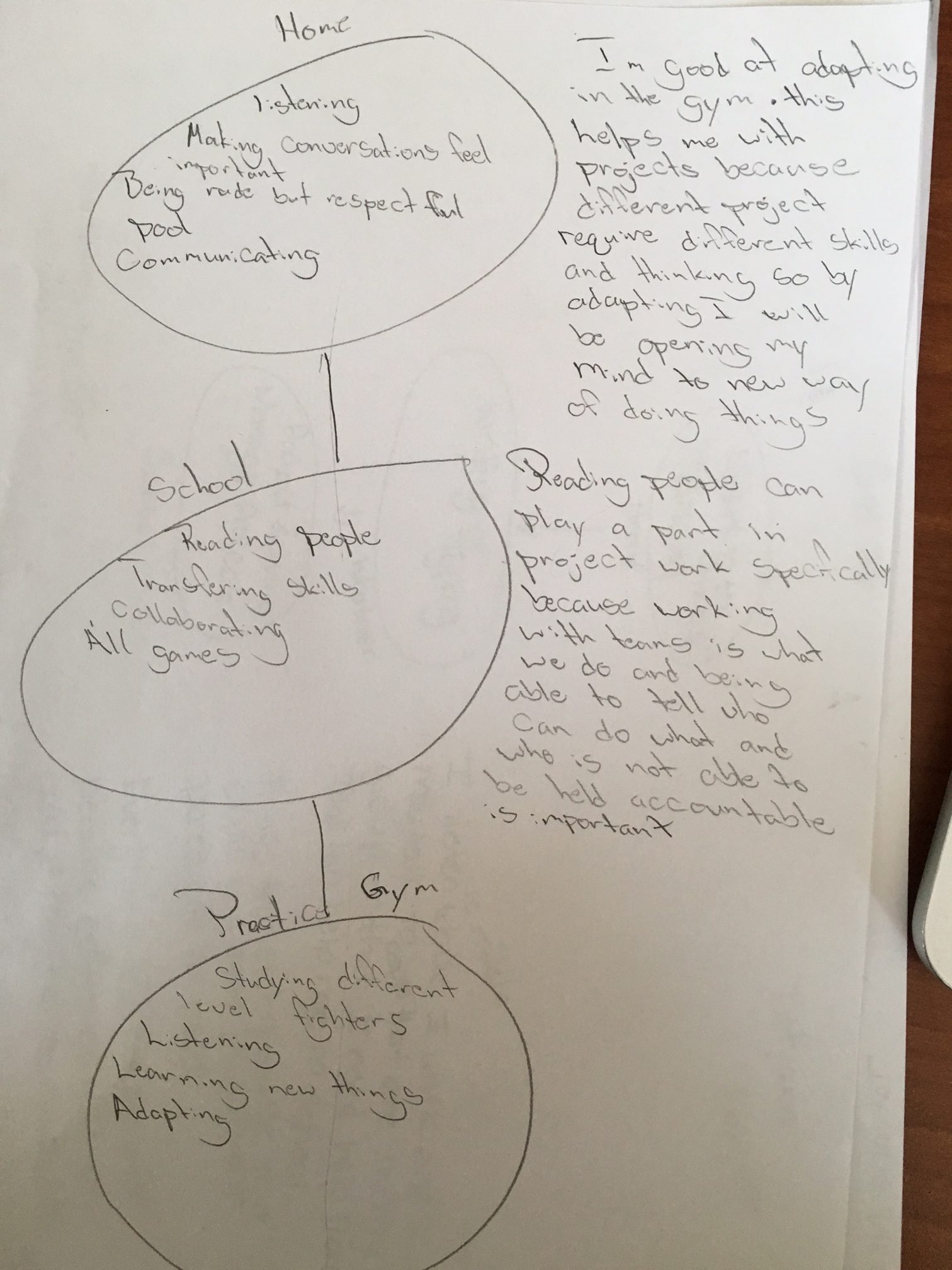
One of my big questions for the week is how we bring work we do in one sphere of our lives into another. In other words, do the skills we cultivate in our home matter for what we do at school? The skills we make on the playing field or in the rehearsal room — how do they make our project work, our academic work, our life work better? Do they? What transfers? What doesn’t transfer?

It’s surprisingly difficult to get people to identify things they’re good at, particularly in public, so we wrote first: name three things you’re good at, one from home, one from school, and one from everywhere else. Then we turned to the ways in which those skills/those strengths do support project work and the way they don’t.

I got some tape (amateur hour, I know) but we have some cool artifacts as well.

What we need to work on in our advisory

We graded ourselves on the four words today. Collaborative, Professional, Persistent, and Motivational…students graded themselves on one word, then graded the community on a second word, and then concluded by grading their peers on the two remaining words.

On the back of the paper, they wrote about what they see as the biggest issues facing our advisory:

Patience
We need to work on talking less when in big groups.
Not being a liar.
One thing we need to work on is staying focused on the work. I think that a good portion of us take independent work for granted.
Not going on Youtube so much.
We need to work on our own projects.
One thing we need to work on is having one voice when someone else is talking.
Getting the entire class to buckle down and be quiet and get the work done when needed. For example, no side conversations, no singing out loud, etc. Basically like a library when it’s time to work. Otherwise it can be as loud as ever.
Talking to people outside our friend groups.
I think people need to shh…
Our four hours togeher we need to get each other to be involved when we’re doing group work because students are willing to collaborate.
One voice/proper argument debate
We need to learn how to get focused when it’s time to work.
Stop talking over each other.
I don’t want to change anything.
Speaking one at a time.

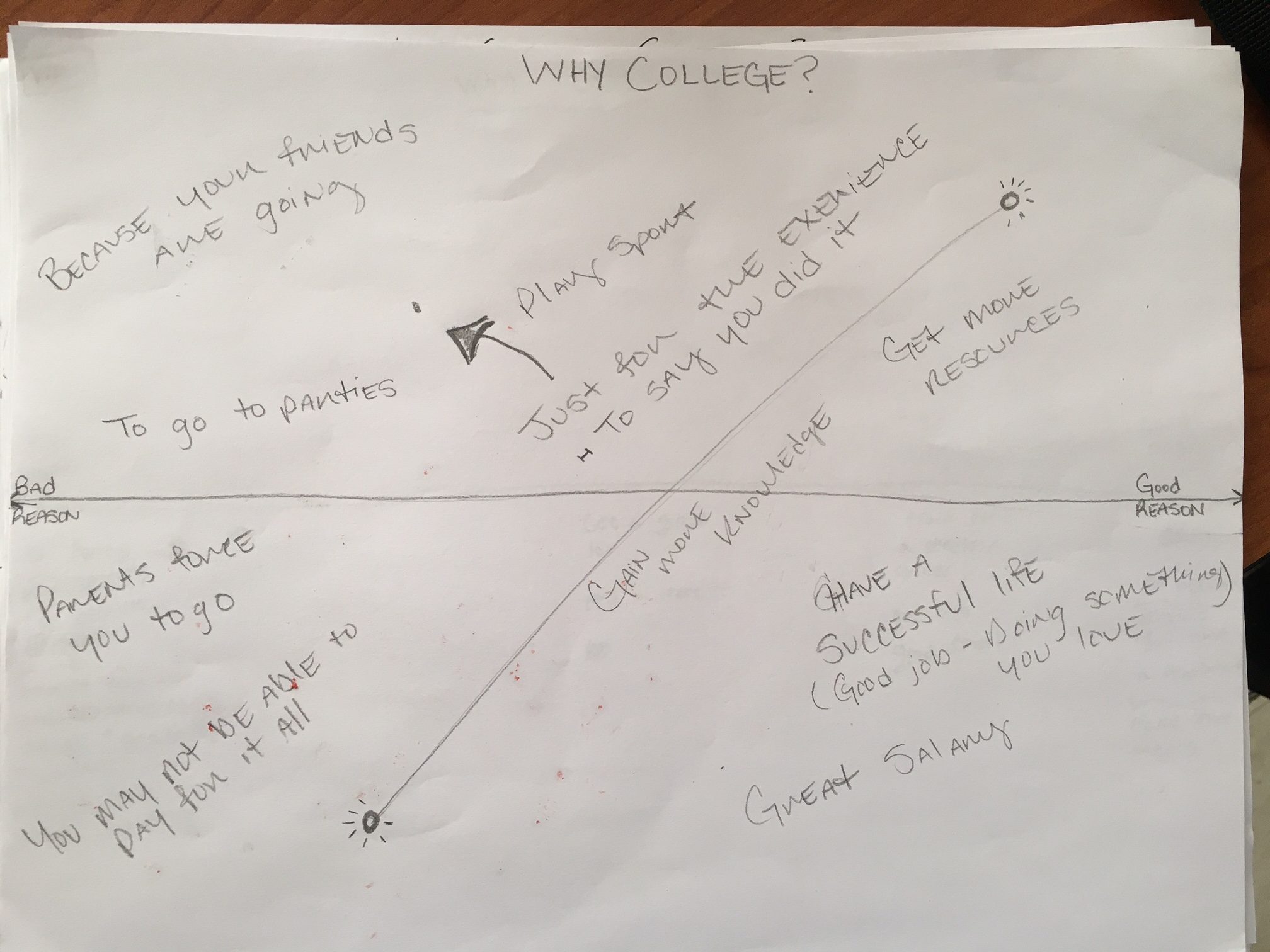
Why go to college? Why go to night school?

Good Thursday morning conversation about the good and bad reasons people go to college. We drew a line, labelled one side good and the other bad, and then started populating the sheet. There are a lot of reasons people go to college; how many good reasons…not so many.

I was happy that at least one person talked about how you go to college to learn about things you care about. And to learn about what you want to learn about.

Then I started singing this song…

Why go to college? Why stay in night school? Going to be different this time…

Adolescence

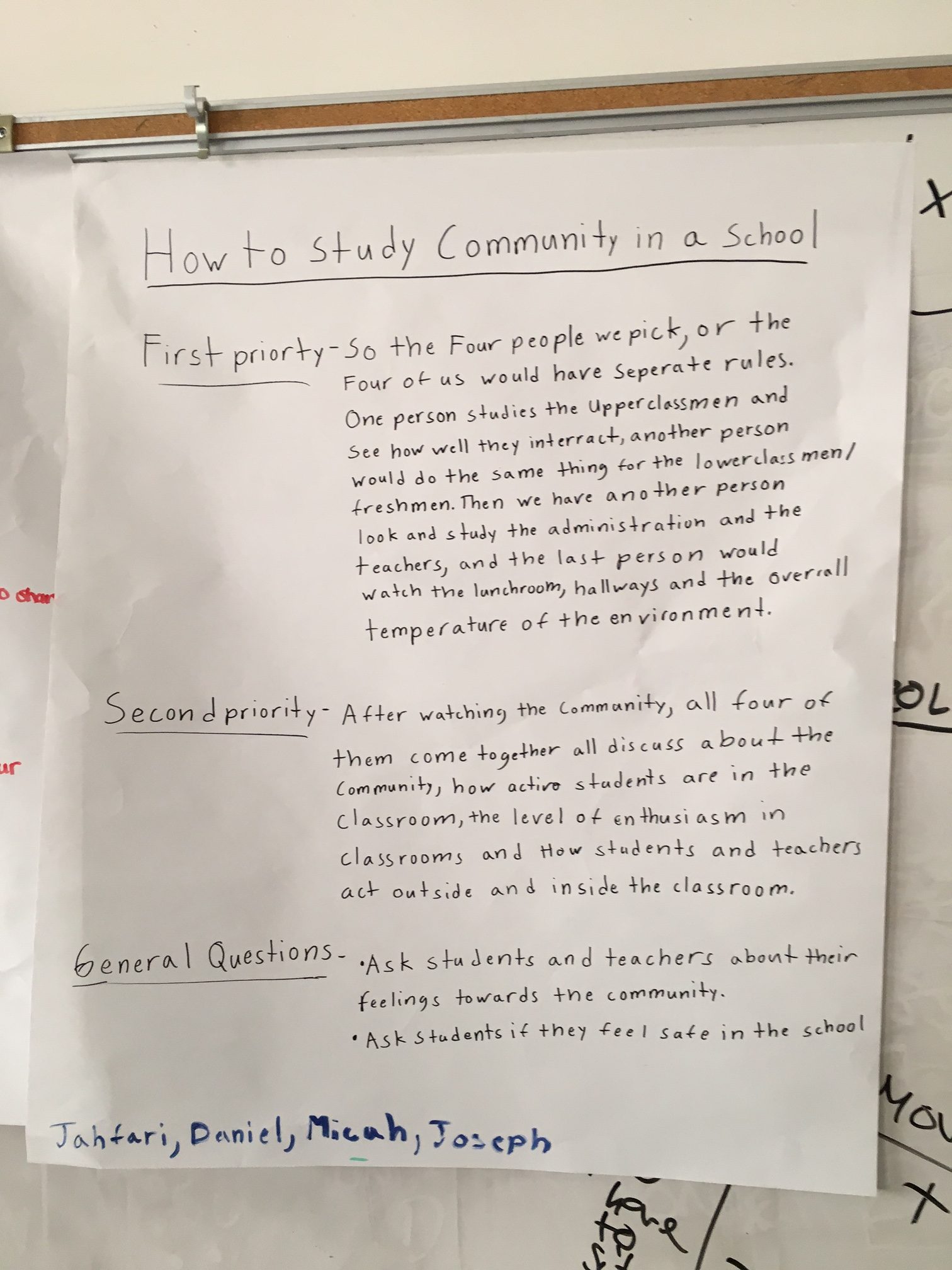
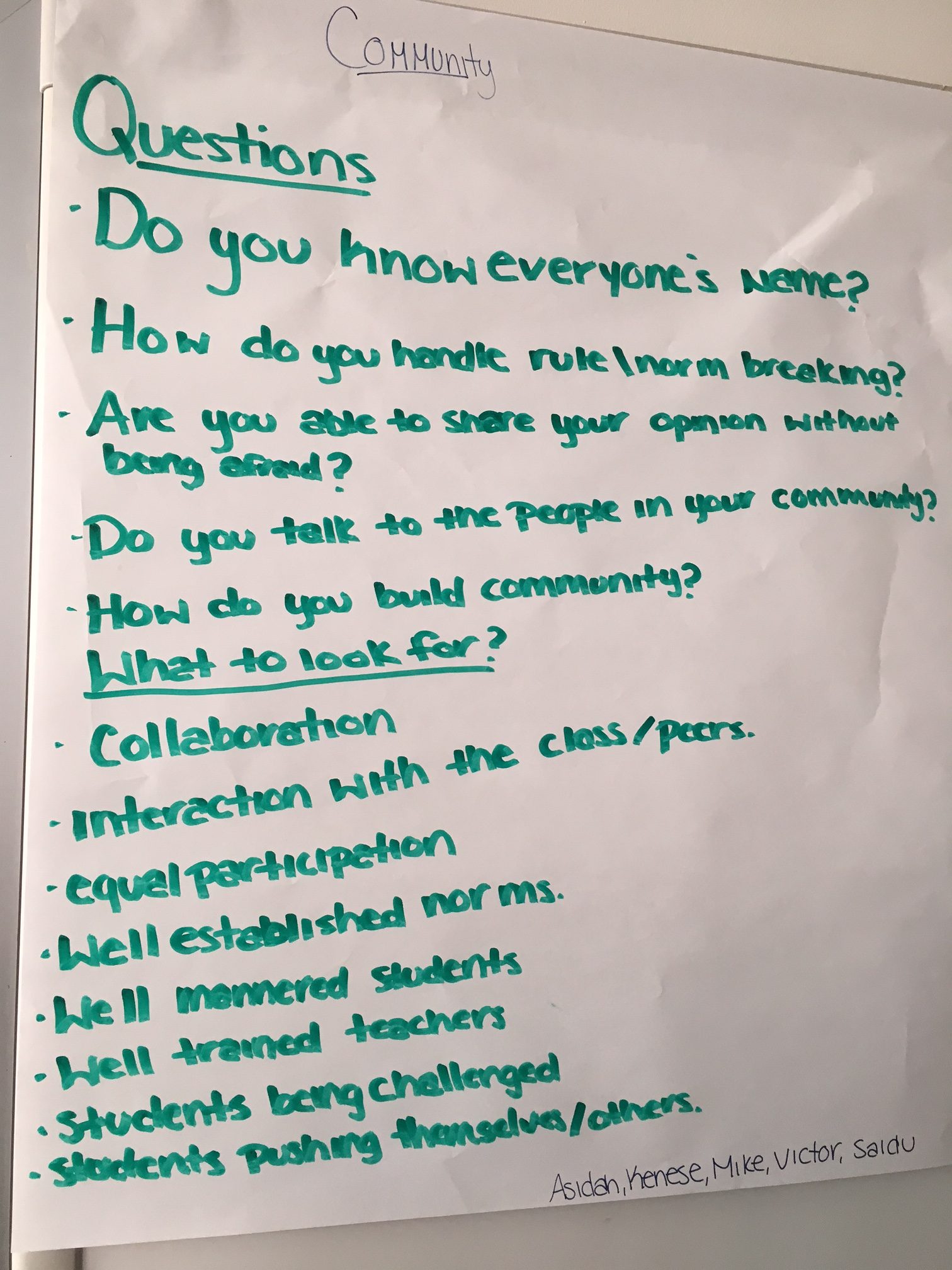
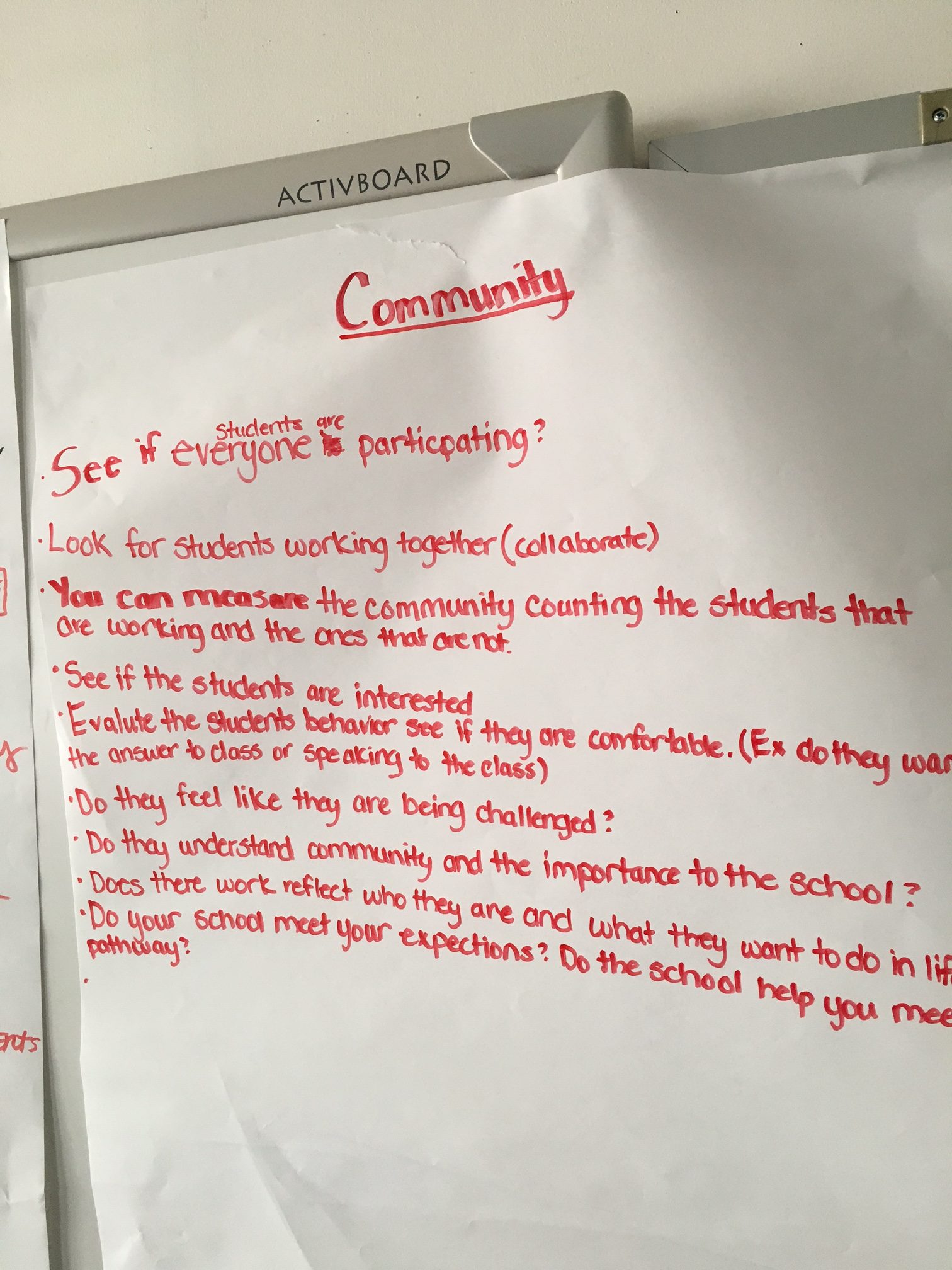
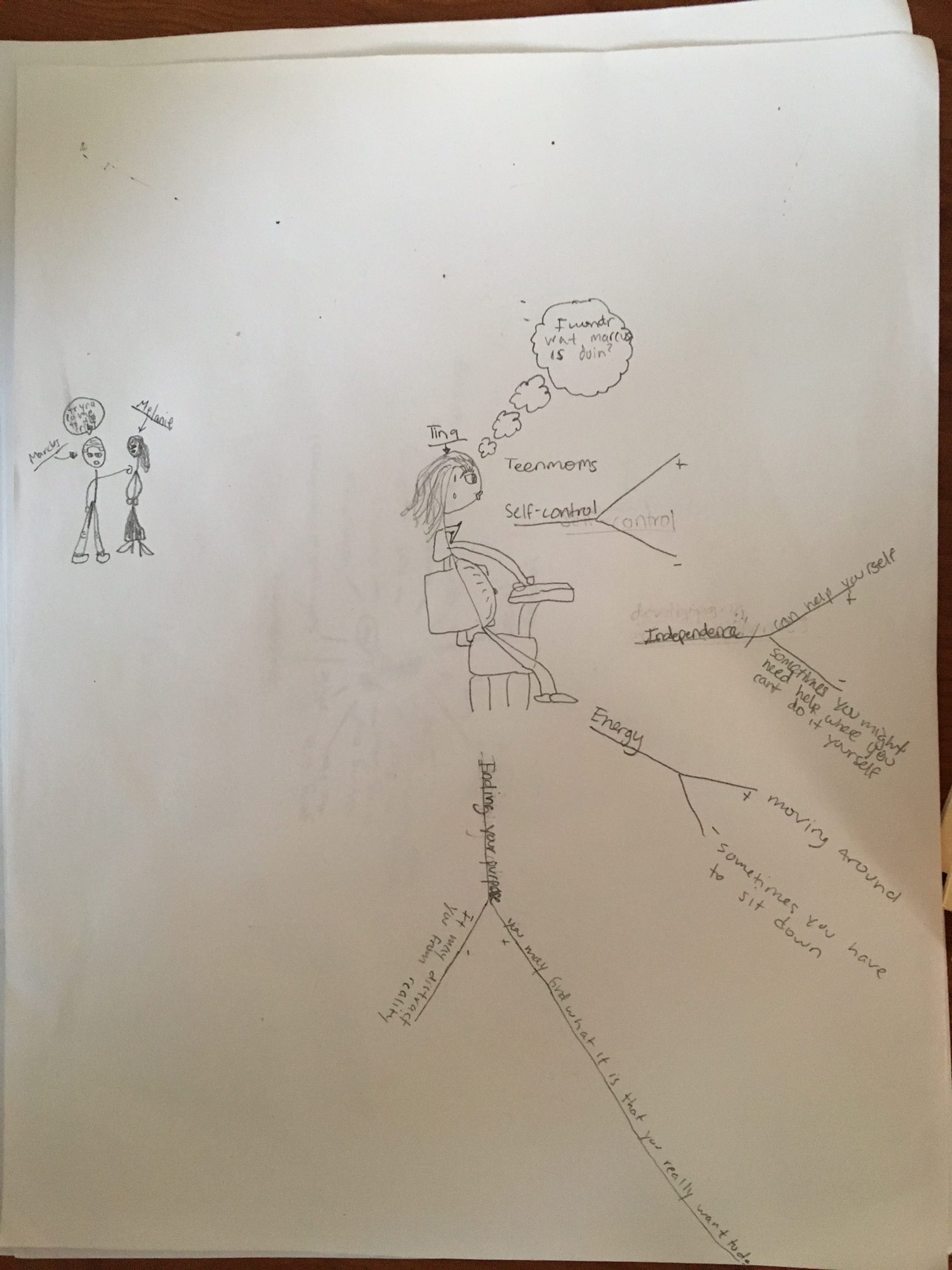
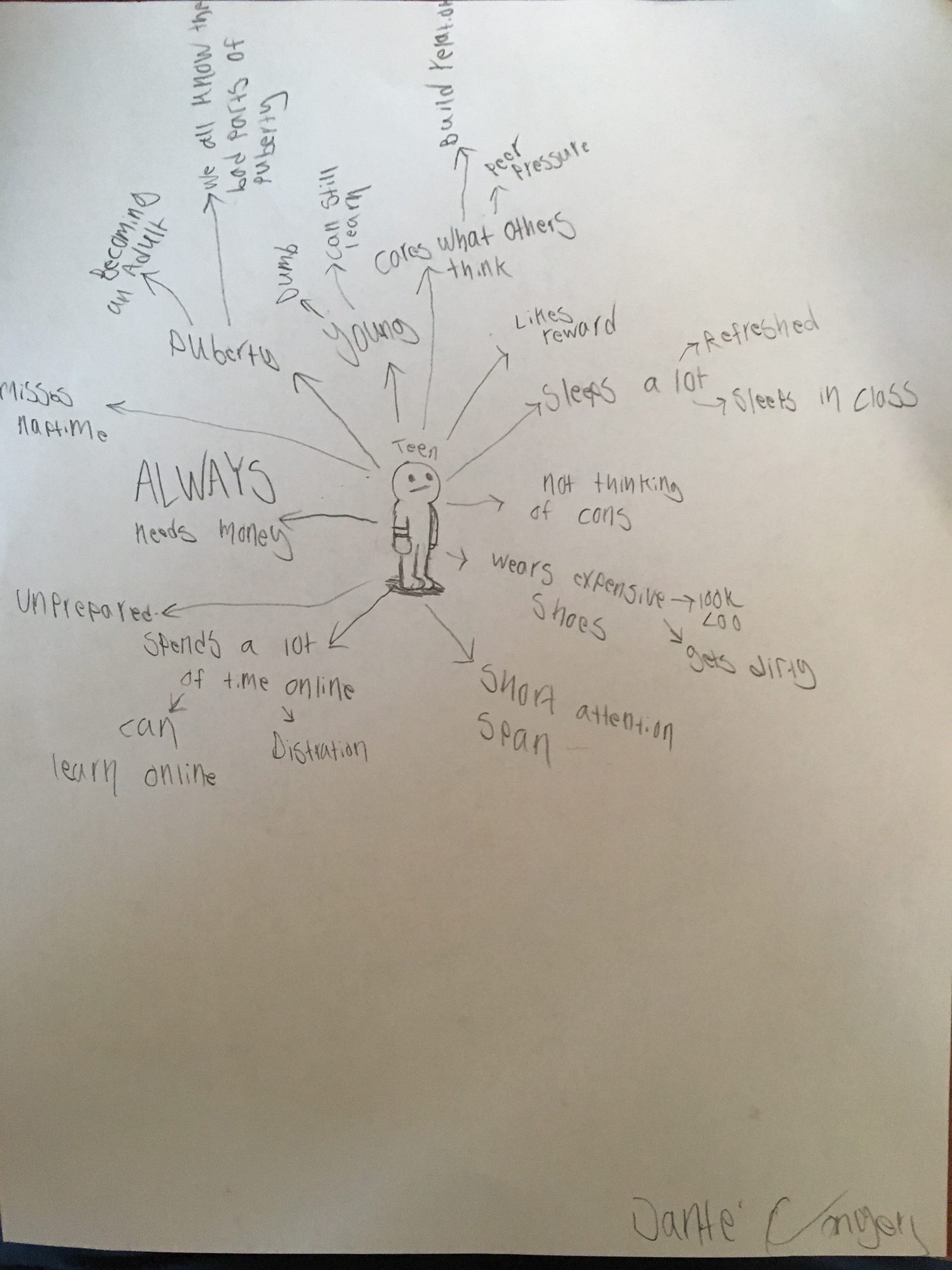
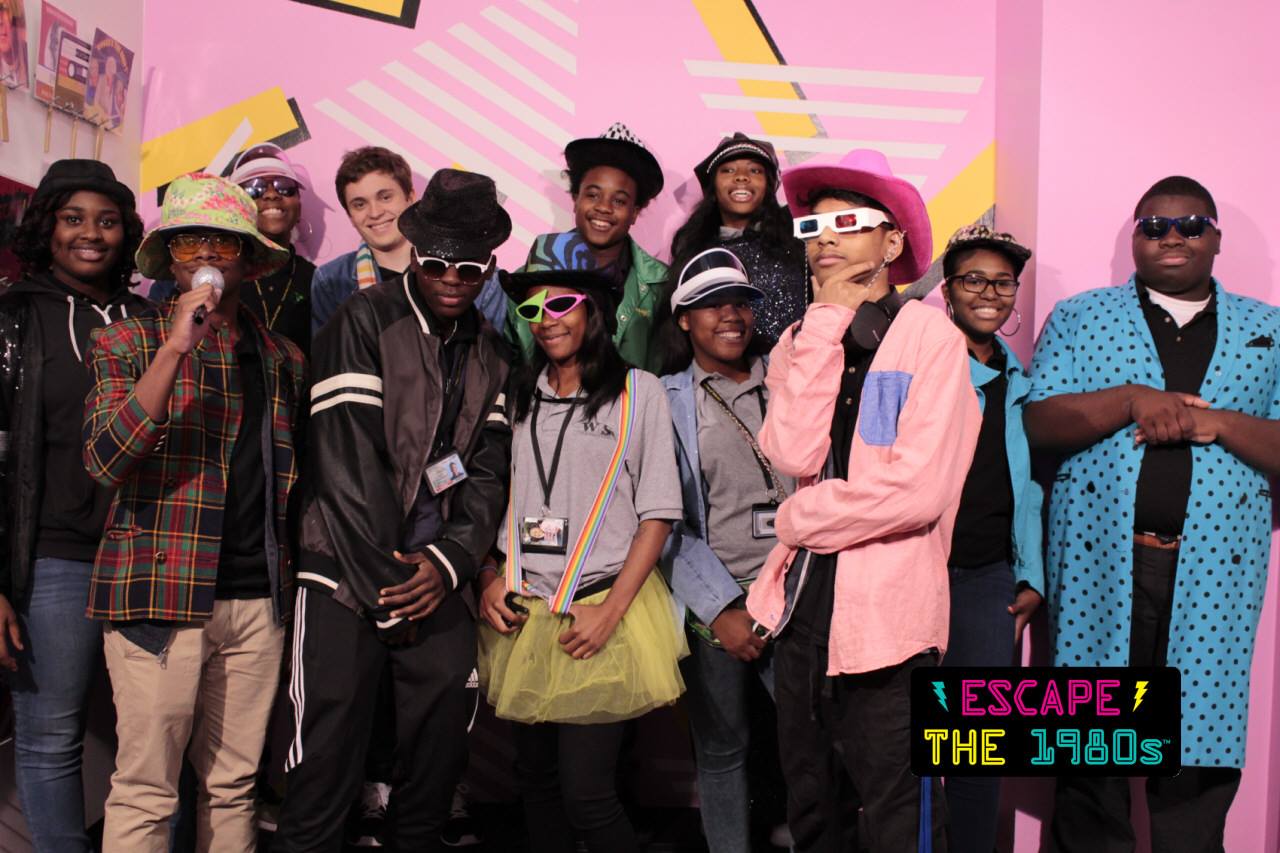
One of our themes for our escape room is adolescence. After all, we’re a high school, and if we’re doing things right, our approach builds on an understanding of adolescence and how to structure a school such that we capitalize on the great parts of being a teenager and minimize the problems.

We first did some drawing. Adolescent surrounded by the traits of adolescence, radiating off as lines. Then, with each line, we wrote about how The Workshop School deals with that trait in positive ways and negative ways.

Example one

Example two

What was striking to me about the eventual list, with explanations, was that it was the same list that a group of experts in the field might have come up with:

Music
Tired
Independence
Doing things just because  
Poor decisions
Social media
Growth  
Sneaky  
Trying to find out identity
Who do you want to be?  
Risk-taking
Short attention span  
Thinking about the future
Style  
Overthinking and not thinking (DW: This is brilliant! Why can your mind be spinning and yet when someone asks you a question you’re like huh?)
What’s life?
Finding your purpose
Developing self-awareness
Social media  
Multitasking
Eros (life drive)  
New beginnings
Rebellious /defy
Finding who you are/figuring out who you are  
Wild
Takes risk  
Exploring limits

What is project based learning?

We’re building escape rooms. We’re thinking about what makes our school and what are the key concepts that we must build it around. Here’s how one student responded when I asked, “what’s at the heart of project based learning?”

It’s that they “give us space to make mistakes. They give us space to figure it out on our own.”

Brilliant.

Now we have to figure out how to make one of our escape room puzzles reflect this idea.