All posts by history

Finding our way to outstanding

Near the beginning of every project, I go through the process of asking students to think about what makes outstanding work. There are lots of reasons for this: it helps give them something to aim for, it helps them consider how they might best use their time, it helps them understand what makes quality work, and, well, it helps me write a rubric, which is pretty much the second work task any teacher has to do. In this case, it was writing a rubric for English, math, and science content based on an upcoming deliverable: a brochure presenting the case for compost along three axes: mathematically, environmentally, and convenience. In other words, how do we convince people to compost based on arguments in those areas?

The kids were crazy – Monday + two hours doing bureaucracy – but still managed to generate a pretty awesome rubric. More evidence that we’re making progress.

English
If someone reading it wants to make compost.
Explains the science behind it all clearly.
Makes it so everyone can comprehend it and makes it appealing to the reader.
If the ideas about argument made about compost are clear and compelling.
Effective, persuasive, and real structure.

Math
The math terms are understandable and equations make sense.
Carefully explains how things can get composted with math; everything adds up and makes sense; they can use the math in their design.
If the measurements of each component are thoughtfully explained along with various ratios.
If the math is backed up in words to make it easier to understand.
There are visuals to help explain the math.
Easily understandable concepts that focus on the way you explain things in your work.
If the numbers presented are chosen carefully, explained well, and the equation is demonstrated in a convincing way.

Social Studies
If you have evidence to make your case.
IF the evidence is synthesized from multiple sources, shows a deep understanding, and clearly helps the argument.
If you have lots of evidence to back up your work.

Last day: pushing through difficulty

Piece of paper and get ready to draw:

Left side: the people and situations you can get yourself in that will allow you to push through difficulty. Be as specific as possible.

Right side:the people and situations that get you in trouble. In other words, what kinds of feelings, mindsets, and places help you fall away from a difficult situation.

Discussion questions:
where does our class fit on this sheet?
where does our school fit on this sheet?
where does your workspace at home fit on this sheet?

Examples:

Reflection:
We pretty quickly got to the question of whether or not it’s about individuals or about the group. Can another person really distract you or is it about what you let other people do?

DD made an incredible point “It’s more important to motivate yourself but it’s stronger when other people do it.”

KM also said “choices I make affect the stuff I want to do.”

AH claimed “how is yourself your biggest obstacle?”

KM noted as did many others, “sometimes it’s a ‘me vs me’ thing, sometimes it’s a ‘me vs. a situation’ situation”

Example from Clapper world:

Untitled

Day three of circle: Doing what you don’t want to do

We travelled to the multipurpose room/gym/cafeteria. A student sat on a stool and shared a thought they’ve had during a time when they didn’t want to do something.

Surrounding them were four students each holding a card:
Negative Ned or Nelly
Positive Polly or Peter
Social media Sal or Sally
Long-term Len or Lisa

After the student shared the thought, the other thoughts were allowed to argue among themselves. As usual several of our actors ruled this activity, leading to social media Sal declaring “Smash that like button! Forget about everything!”

We debriefed and talked about all humans have multiple voices, multiple impulses and some strategies to acknowledge all them. Someone once said to me that it’s like having fifty televisions going at once; your job is to focus on one and not try and continually turn them all off.

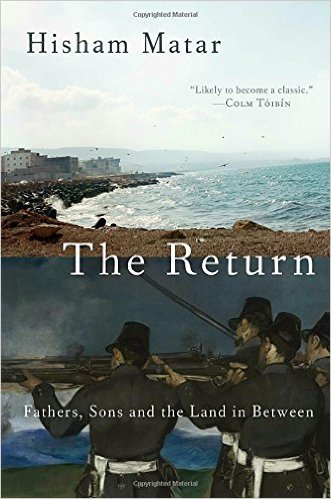
Block quotes from The Return

Perhaps memorials and all the sacred and secular rituals of morning across our human history are but failed gestures.The dead live with us. Grief is not a whodunit story, or a puzzle to solve, but an active and vibrant enterprise. It is hard, honest work. It can break your back. It is part of one’s initiation into death — I don’t know why, I have no way of justifying it — it is a hopeful part at that. What is extraordinary is that, given everything that happened, the natural alignment of the heart remains towards the light.

Matar, Hisham. The Return: Fathers, Sons and the Lands in Between. New York: Random House, 2016.

Chapter 43: Adolescents

Our circle activities this week are designed to explore the idea of how we learn to do things we don’t want to do.

Q: How do we deal with it when we don’t feel like doing things?

We had a great opening conversation yesterday especially when someone declared immediately:

“See, that’s why I can’t wait to be an adult. Adults never have to do anything they don’t want to do.”

Yep, that’s why we do this work: puncturing that illusion early. I would love to hear This American Life talk to strangers about all the things they had to do over the course of the day that they didn’t want to do.

That being said, part of our goal and it’s certainly a goal of mine, is to help our fellow human beings figure out how to structure a life where nearly everything you do has a purpose and that the things you don’t want to do (say making a real lunch for your children every morning at 6:00 AM) support objectives that are important to you (having healthy children).

Very difficult activity that worked well

Untitled

It’s shocking how much time there is in a quarter. Just shocking.

In trying to fill this out, students struggled mightily to envision how this time might be used. Some of this emerged from unwillingness to think about how many hours ought to be spent gathering background information, i.e., reading closely. Some of this emerges from the choices made about the actual project. You can’t spend 125 hours building a bookshelf. Some of this emerged from project ideas where kids struggled to identify different academic components. There’s good academic work in building a youtube channel but it’s not readily identifiable.

Humility; being humbled

There’s a cool piece in the paper today about the original meaning of humility, of “being humbled.”

Yesterday, while participating in a panel at Educon, I had talked about the necessity of humility in a teaching practice, particularly in terms of the mentoring relationship. In some ways, humility is a necessity for a mentor teacher, because if you’re at all self-aware you’re going to be humbled by your students, usually in an embarrassing way and usually after you’ve just explained how you might approach curriculum (the kids hate it), management (the kids ignite something), community (a fight breaks out), deliberation (they start screaming), documentation (they submit blank papers). You get the idea.

There’s nothing wrong with this as any teacher has good days and bad. But what I hope I’m trying to teach my students (and any poor soul unlucky enough to be student teaching with me) is how you keep moving right through these moments, that you can expect them even if you can’t predict them.

Post exhibition reflection_questions I want to ask everybody

Thoughts and ideas after watching five presentations:

MH
In video making, is it fair to ask everyone to envision what should be on the screen when they’ve not necessarily done that before? As a facilitator, I thought this would be a good intellectual exercise and would make the filmmaking process easier. Maybe I was wrong.

How much of life and project work is “pretty annoying to do it every day but at the end, it’s pretty cool.”

How do you teach people to grind? Or…how do you do too much so you have cut down as opposed to just trying to get over the finish line?

How do I get people to continually refer back to the requirements of the contest/project? In other words, if you’re submitting to a contest for CSPan, how often should you be referring to their rules to figure out what should come next?

AH
“I don’t know if it’s a skill or not, but I basically can get through anything.”

Yes, A., that’s a skill.

KH: “Can’t teach these kids nothing these days.” Oh, K.

MT
Do we allow an individual and a group project during the second project block? What would happen if we did so? Could kids handle both in 75 minutes a day or is this a recipe for disaster?

DW
“Rather than being a completed project, it was more of a great experience.”
“In order for it to be a complete project, you always gotta be doing something.”

“You can see poverty in a lot of things.”

Should I eliminate voice overs as part of next year’s project?

(Realization that the students are aware of how quickly triggered I am by saying publicly things like “we don’t have enough time.” That’s a good thing. A very good thing.)

DD
How important the origin story of a project is… D., you’re talking about how a conversation with an old teacher combined with a book we were reading to lead you towards an idea for a project. That’s awesome. I need to develop a circle activity for this.

Reflection: What we learned yesterday!

Students began day two of exhibitions by reflecting on yesterday and what we learned from the first day of exhibitions:

* You will feel overwhelmed if you try and do a lot at once. -KM
* Save your work continuously because the technology will let you down. -KM
* Make sure to document all your work and take pictures every step of the way. TC
* Make it yours and be proud of your work. -TC
* Make sure your stories are told from start to finish. -TC
* I learned how much work and dedication some of us put into this project and video. -SH
* I liked how the people reflected off their work and gave honest feedback; I like how they talked about how they can go back and edit their work. -LS
* Never give up no matter what. We are all here to help each other when we need it. -DD
* Take ownership of your work, stay honest, and talk about the work you did, the work you didn’t do, and why it is or isn’t done. -DD
* The main thing that I learned is how other people deal with stress. -AM
* One thing that I learned from exhibitions is even though you don’t like a project still do it because you never know how good you will do. -AH