Category Archives: Uncategorized

Monday question: what’s the difference?

What’s the difference between an expectation and a requirement?

“An expectation and a requirement are different because an expectation is something expected of you, meaning it’s what you should do, not what you have to do.” MH

“An expectation is something that someone thinks you should do or how you should act. But if can be completely disregarded if you don’t care about that person. A requirement is basically an expectation that has to be met.” QG

(MC response: what if I said your expectations need to come from yourself?)

The difference between an expectation and a requirement is that when people expect something of you, they are merely setting a guideline that you could follow but it’s not something you have to do. It’s almost like people want you to do something, but they want you to do those things yourself. A requirement…means there is a set of rules that you have to follow in order to reach some kind of pre-meditated goal that has been laid out. Requirements aren’t something that can be negotiated. JR
Friday Review Board

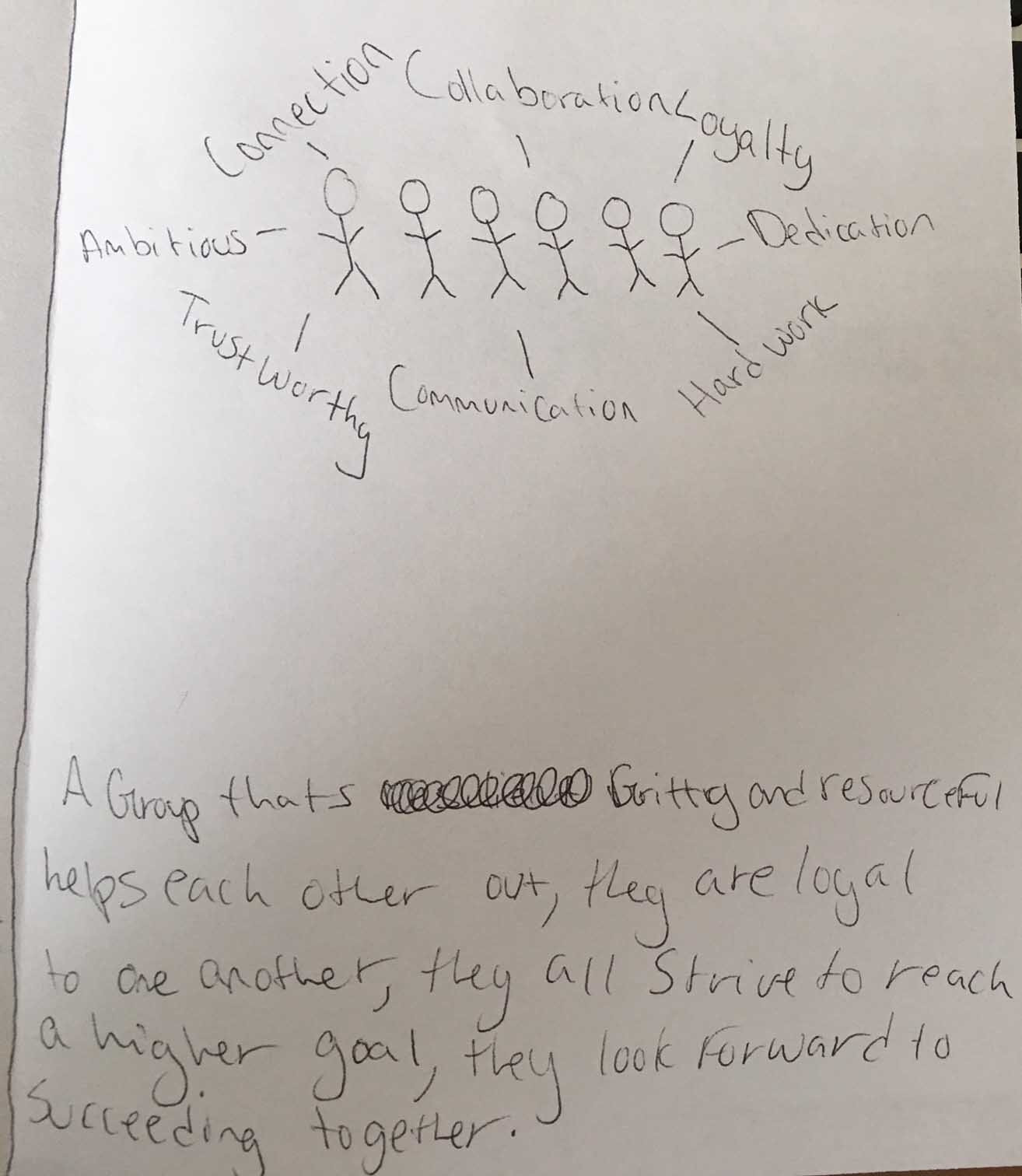
One of the tensions in a space where kids are all working on different projects is maintaining a common culture. We spend circle time talking different topics — grit, feedback, problem solving — but they then take on their own projects. I have to find ways so that they can weigh in on each other’s work in substantive ways.

I also have to do all the work necessary for any group of adolescentshuman beings who will happily form and reform into groups where they’re most comfortable or, for lack of a better word, cliques.

Step one: Establish four ground rules for the table.

Step two: Read the paragraph description. As a large group, make a list of the traits and characteristics that will make the final version of this project outstanding.

Step three: Read/skim through the deliverable you have in front of you. What evidence do you see of outstanding work? What have they read? What have they written?

Step four: What are four to six concrete things this group has to do in order to move this work along so that it will become outstanding?

Student feedback on the process
Why should we do this?
*It was helpful to see what the other groups are working on.
*It was helpful for the one group with making their purpose stronger.
*We all got a chance to see all the work that everybody does.
*Everybody learned about the process they went through (while doing their projects).
*It gave some groups feedback they’d never even thought about.
*Everyone gave and got good amounts of feedback.
*It was helpful…people who did not understand our project before now know.

How should we do it differently?
*have one representative in the groups to hear the feedback.
*the sheet could have had better and stronger questions.
*Maybe next time we can have a group by group process where everyone gives everyone else feedback.

The trail we leave

Spend too much time watching the Walking Dead and your opening circle activities look like this:

“When someone is committed to their work, what footprints do they leave behind? What trail is left when they’ve finished?”

JB: People see what you’ve done; they can point at it and understand the accomplishment

HG: The final product makes an impact on people. It creates further opportunities.

ES: They leave behind drafts and revisions; you can see what the work process looked like.

TD: You can show off what you’ve done.

AB: Your name is known.

TC: you’ve provided a model of how you work.

Student posts:
Untitled

Untitled

People we know, people we don’t know

Spent this Wednesday morning talking about people that we know who are inside of their work (and have total ownership of it) as well as describing individuals we don’t know whose life work shows their ownership over their work. The list of characteristics is here:

Time invested
People want to be around them
Their work helps other people
They’ve made changes/adjustments; they know how to do things
Know everything about it; confident in their work
Constantly revising
They are recognized

Student Work:

My dork work (Lisa on the left, author/critic A.O. Scott, whose book I’m loving, is on the right)

Untitled

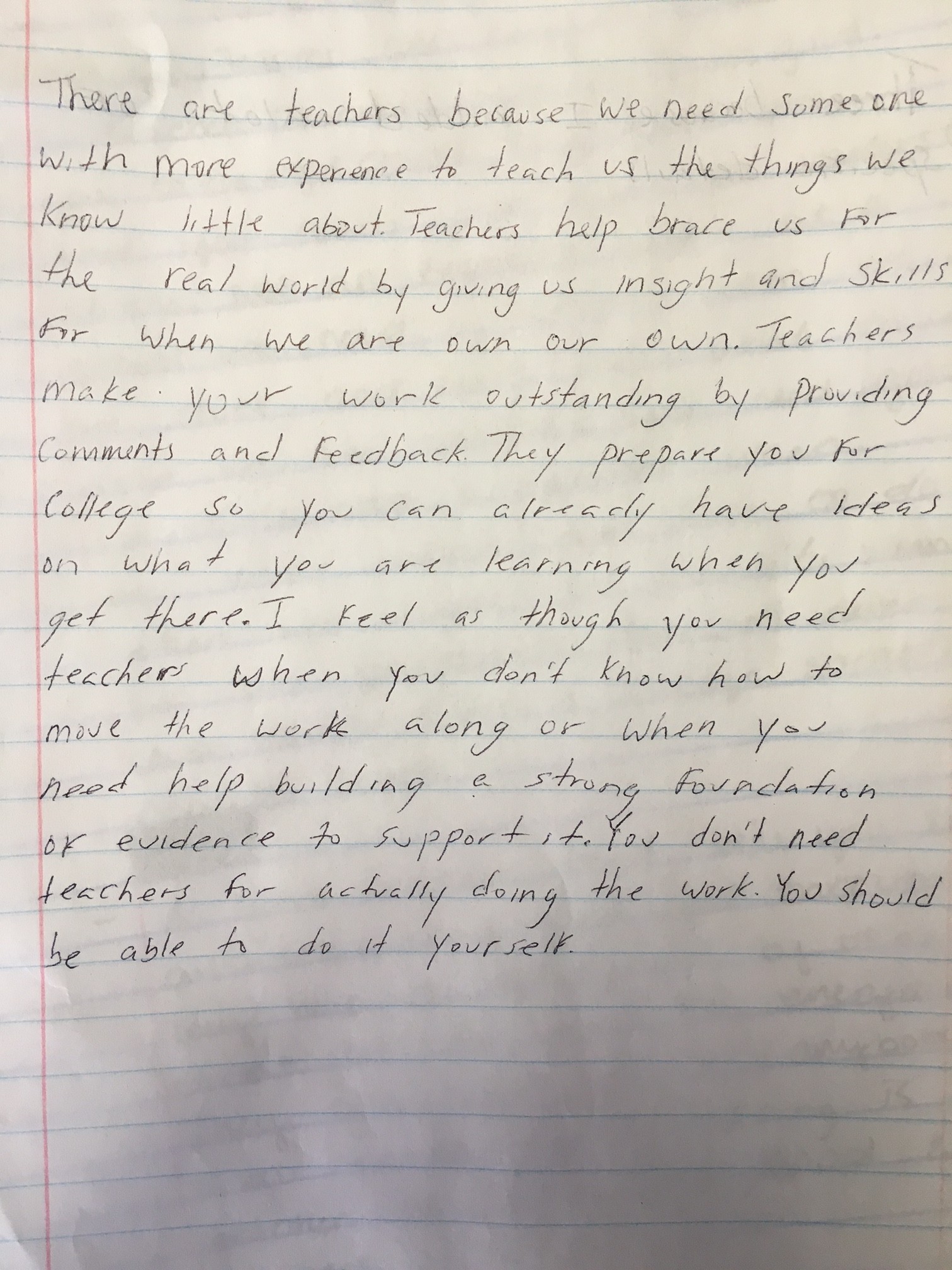
Why do we need teachers?

I wanted to spend my week in advisory discussing and focusing on the idea of taking control of your own project, of owning a project, of agency. I missed two days last week — the first time in twenty years I missed two days in a row — and there were mixed results. Some students advanced their projects while others did nothing.

It got me thinking about the work I still do that I want a teacher or a coach for as well as the things I do that I’d like to do on my own. And last night, as I worked on a project with my son, which he had put off until Sunday night, I tried to have the conversation about how one takes control of one’s own work, even when you still need help.

How do you take control of your own work, even when you still need help?

Today, though, I asked the following: why are there teachers? What do teachers do? When do you need teachers? When do you not need teachers?

You need teachers when you don’t know what to do next.
You need teachers when you aren’t self-sufficient.
You need teachers when you don’t know something or a skill.
You sometimes need teachers to simply just monitor students.
You need teachers to help us figure out what we know and don’t.

You don’t need teachers when you have a room of peers to help you.
You don’t need teachers when you’re home.
You don’t need a teacher when you know what you want to do and you can figure it out yourself.
You don’t need teachers to go to the bathroom.
You don’t need teachers to do well on our report card.
You don’t need teachers when it comes time to put into play all of the lessons they’ve taught you.
You don’t need teachers when you’ve learned enough to teach other people.

One place we went quickly in the conversation was that there are “teachers who aren’t in schools” and that “you can learn from people who don’t have much education.”

IMG_5168

Expert Board: Monday

Mondays are always hard. Always hard. I try to focus on recovering the culture of the room and helping everyone remember the in-school expectations.

This morning I tried to begin by having students nominate themselves and one peer for an “expert board.” My goal was to have a list of students that we can turn to while we are working on projects. I also hoped that describing two of their own traits and then one of their peers’ great traits would rebuild the culture as well, as they reflected on what each person at the table might bring to the projects.

There was enough morning chaos that I had to pull their answers and read (anonymously) the list of skills that kids would bring to all of our projects.

When it’s going well…

When things are going well, you’re debating what professionals debate. As we work our way into our oral history unit, I felt as though the students were torn: do you find a person to interview and make the center of your oral history or do you find a theme that you’re interested in and then start conducting your interview.

This is an old dilemma for historians. You may want to study something but do not have the sources to pull it off. You can be as creative as you like with the sources you do have, whether they’re documents, statistics, shards of pottery, newspapers, but you can’t write history without sources.

In our conversation today, that’s exactly the issue the students circled, explored, and churned through. Some students seem committed enough to their theme that they’ll keep asking folks until they find a great source. Others want to talk with Grandma so much that they’ll move their theme. Others became aware that no matter how much they want to study something using oral history, in some situations it will may be possible. A couple of examples: interviewing people they have not met will require extensive leg work and interviewing dead people isn’t possible. Yet.

Doing your best…

Life is full of people urging you to do your best. Schools are full of posters, teacher voices, and dutiful students echoing the idea that you should always do your best.

Knowing we have another day of testing and knowing that these tests can show that a project-based approach can generate academic gains,i.e., it’s important for everyone to do their best. Sigh.

What I tried this morning was to ask everyone to reflect why it’s important to always do your best but also when you might need to “shut down the engines.”

I wanted to think about whether it’s possible to always do one’s best. I wanted to think about when compromises have to be made. I wanted to think about if there are moments where other forces are at work. I wanted to think about which standards students should aim for and what those standards might mean. As always, I wanted to think about how I/we want to be known.