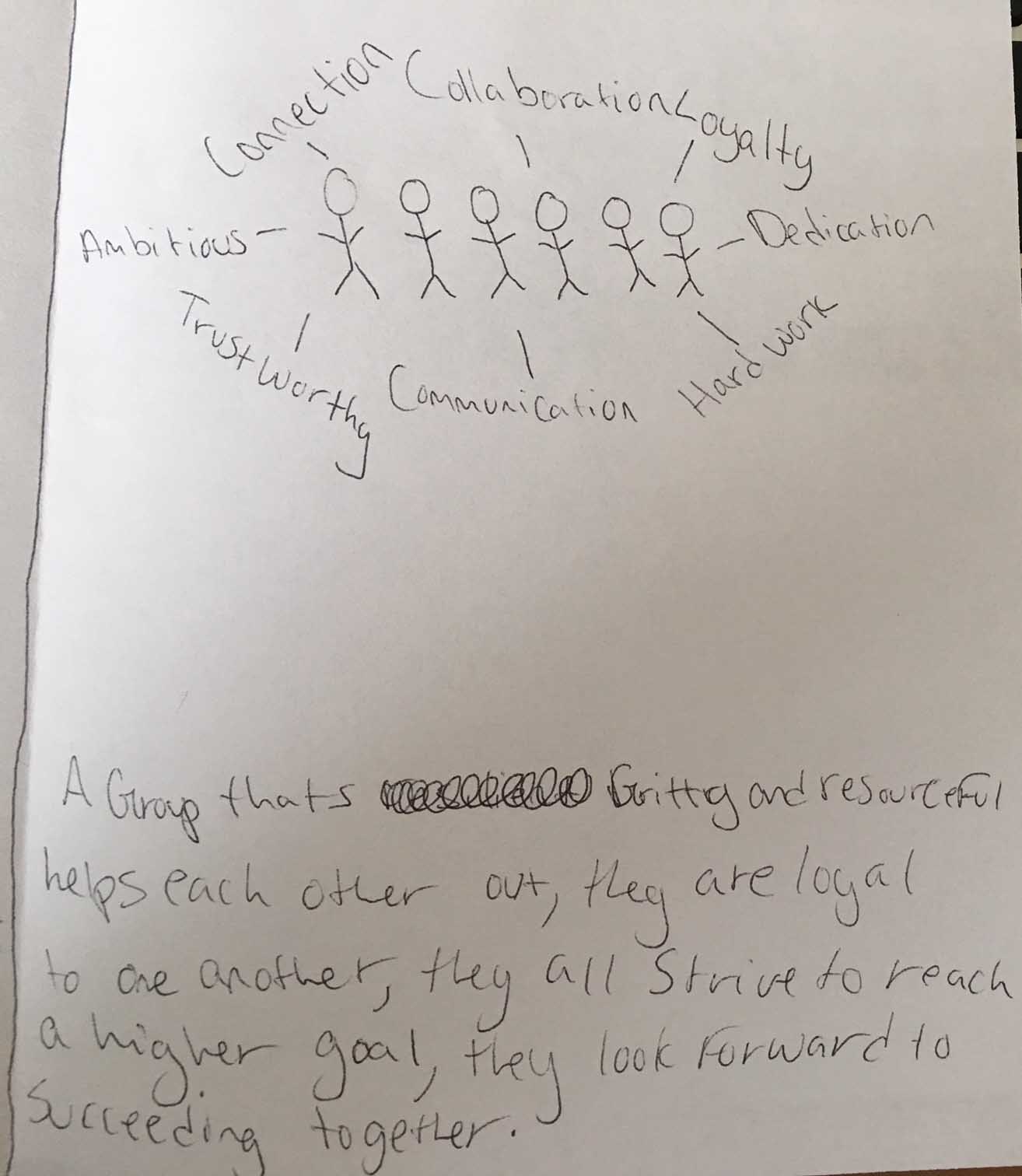
One of the tensions in a space where kids are all working on different projects is maintaining a common culture. We spend circle time talking different topics — grit, feedback, problem solving — but they then take on their own projects. I have to find ways so that they can weigh in on each other’s work in substantive ways.
I also have to do all the work necessary for any group of adolescentshuman beings who will happily form and reform into groups where they’re most comfortable or, for lack of a better word, cliques.
Step one: Establish four ground rules for the table.
Step two: Read the paragraph description. As a large group, make a list of the traits and characteristics that will make the final version of this project outstanding.
Step three: Read/skim through the deliverable you have in front of you. What evidence do you see of outstanding work? What have they read? What have they written?
Step four: What are four to six concrete things this group has to do in order to move this work along so that it will become outstanding?
Student feedback on the process
Why should we do this?
*It was helpful to see what the other groups are working on.
*It was helpful for the one group with making their purpose stronger.
*We all got a chance to see all the work that everybody does.
*Everybody learned about the process they went through (while doing their projects).
*It gave some groups feedback they’d never even thought about.
*Everyone gave and got good amounts of feedback.
*It was helpful…people who did not understand our project before now know.
How should we do it differently?
*have one representative in the groups to hear the feedback.
*the sheet could have had better and stronger questions.
*Maybe next time we can have a group by group process where everyone gives everyone else feedback.