
Monthly Archives: January 2016
What testing means
I have to erase these quotes from the entryway of our room,
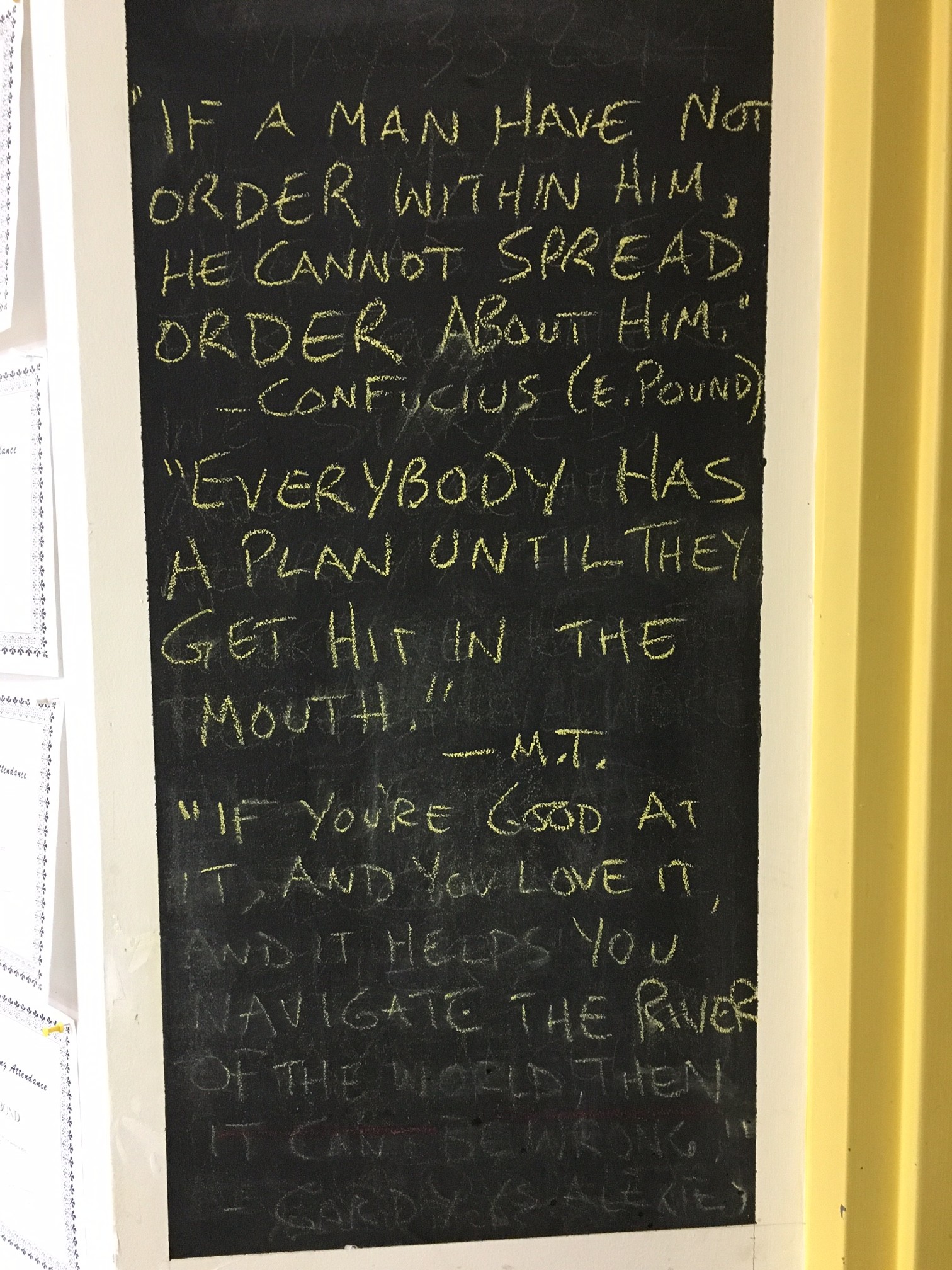
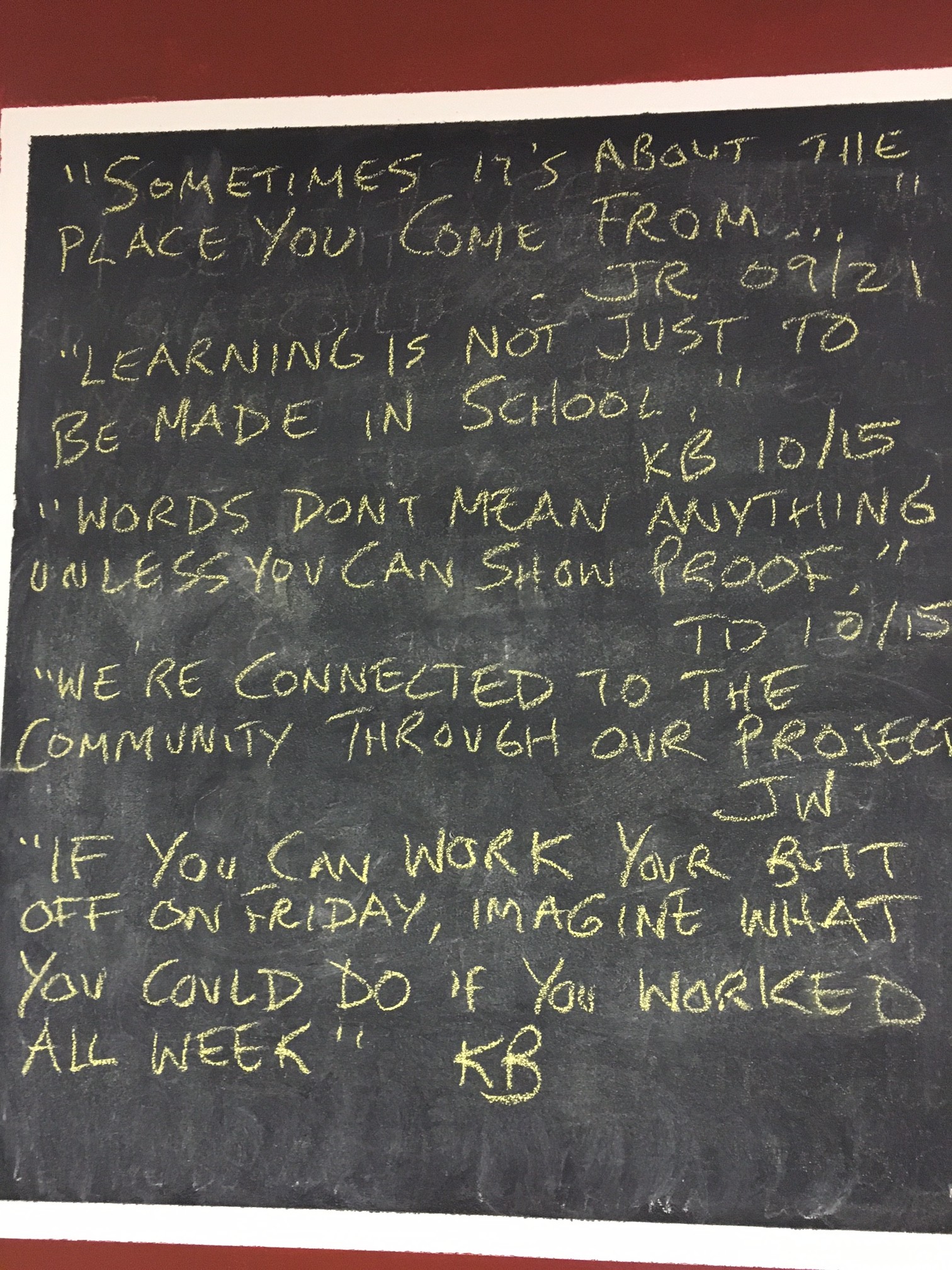
I have to erase this collection of student quotes,
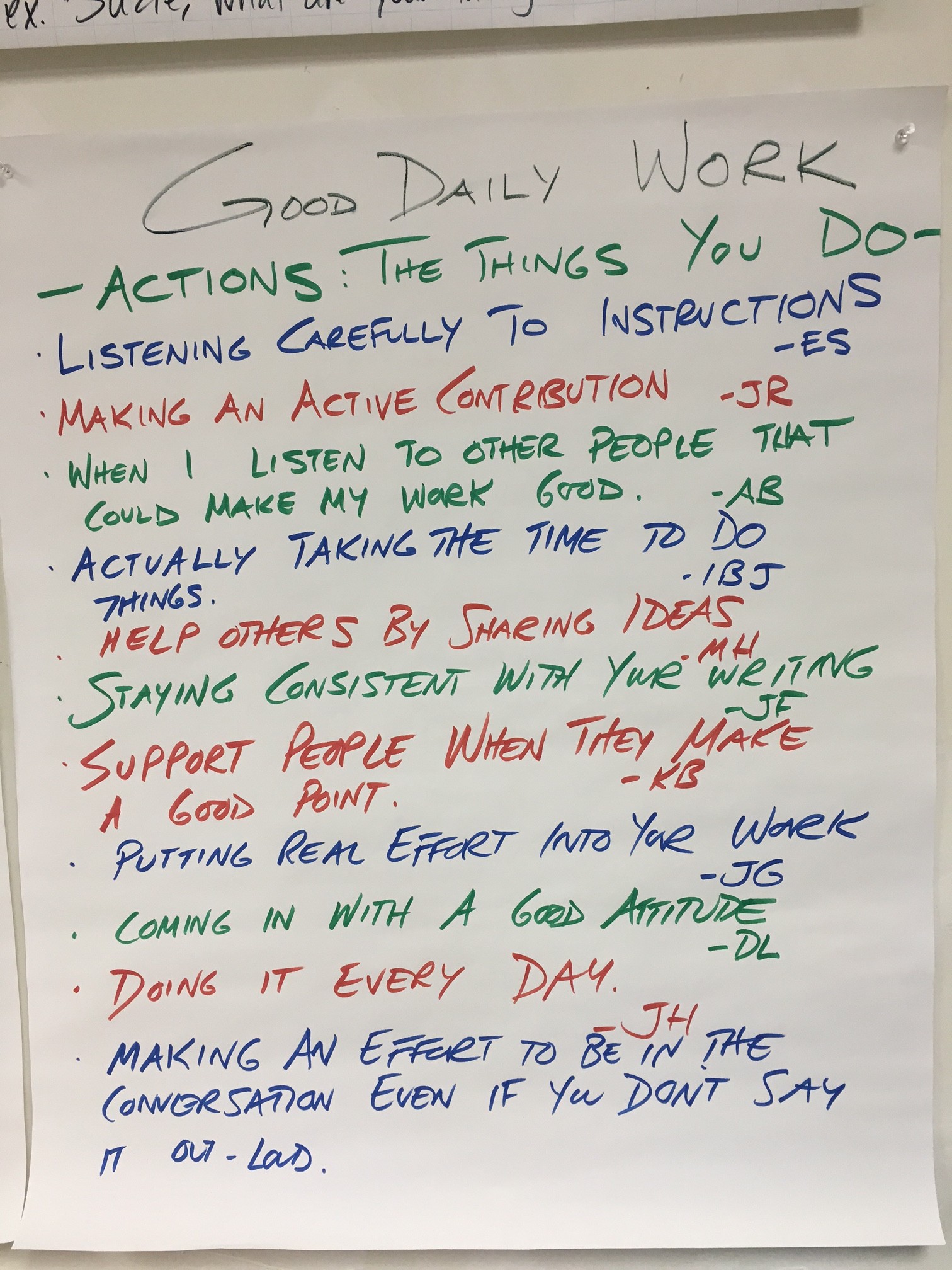
I have to hide this student-created list of what constitutes good daily actions,
So that I can collect all of their phones in a seed starting bin,

and administer an algebra one test.
Through one student’s eyes
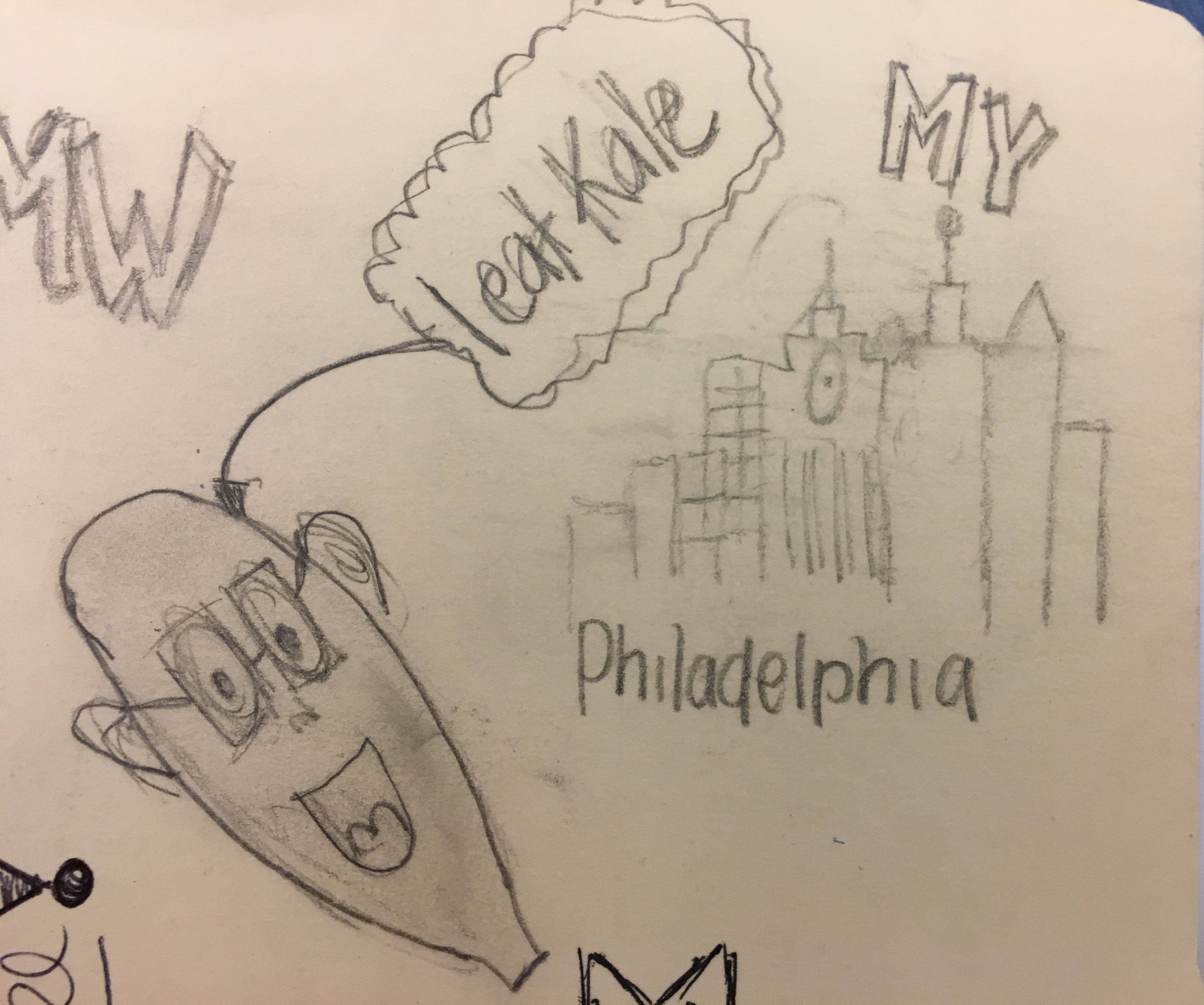
I eat kale.
Food for thought
K. Anthony Appiah on whether someone should send their child to a bad public school.
vs.
Allison Benedikt writing in Slate.
Poaching from Stanford d school, day two
Today we read a blurb from the alumni magazine. We began by writing our answers to the question posed at the outset — can imagination be taught — and then read the first 500 words or so of the article.
I was really happy with my response until I read what the students had to say:
“I think you can teach someone to be imaginative. You just have to expose them to different things. And make them want to think differently and dream of big goals.” TC
“Imagination can be taught because I had to learn that seeing is believing. You can imagine anything.”
“Instead of looking at things how they are look at them how you could change them.” QG
“I think people who say they “lack” imagination just have less of a skill in bringing it out. That part can be taught definitely.” IB
“Imagination is more powerful when you are inspired by something or when you want to do something different. Imagination is already in you, it’s your choice to express it…Whatever you love to do is helping your imagination because your constantly trying to think outside of the box and that’s where your imagination comes from, like when you want something you have an image in your head on how to get it.”
Best points to debate Monday:
“No one can teach you how to picture an image you have not experienced.”
“I think imagination can be taught in a way but if it’s taught it wouldn’t be as strong as someone’s who learned it on their own or someone who has it naturally.” TJC
(Note I could debate this forever — what a great insight)
“Some people’s imagination gets stronger with age and some people’s imaginations get duller with age.”
“Getting someone to think outside the box with precise imagery and unrealistic thoughts helps with imagination.”
Great Quote from Delicious Foods
It turned out that all stories betray you when you’re down to chasing crickets for your next meal. A story might help you get through your life, he said, but it doesn’t literally keep you alive–if anything, most people who have power turn their story into a brick wall keeping out somebody else’s truth so that they can continue the life they believe themselves to be leading, trying somehow to preserve the idea that they’re good people in their small lives, despite their involvement, however indirect, with bigger evils.
Think about it.
Hannaham, James. Delicious Foods: A Novel. (New York: Little, Brown and Co, 2015), 367.
What helps people change?
Began the day by thinking about this question followed by setting some resolutions about this quarter’s work.
Some great thoughts:
“being around people doing the right thing makes you want to turn around and do the right thing.” –J
“people change because of people close to them.” –M
“people change because they get tired of living the way they’re living.” –C
“it takes mindfulness and active listening to see or hear when you’re doing something wrong.” –J
“people change when they see other people change.” –C
“when you mature” — T
“people change when they want to make something in their life better” –K
“when they think about how they want to be known.” –D
“wanting to do things different from the previous years.” –J
—
Leading these conversations, you feel the work that the students have done in previous years and how the community is helping kids to grow and change in positive ways. There’s a gap, sure, between what they’re saying and what they’re doing, but doesn’t that exist for all of us? Shouldn’t education be about helping students see and feel those connections for themselves?


