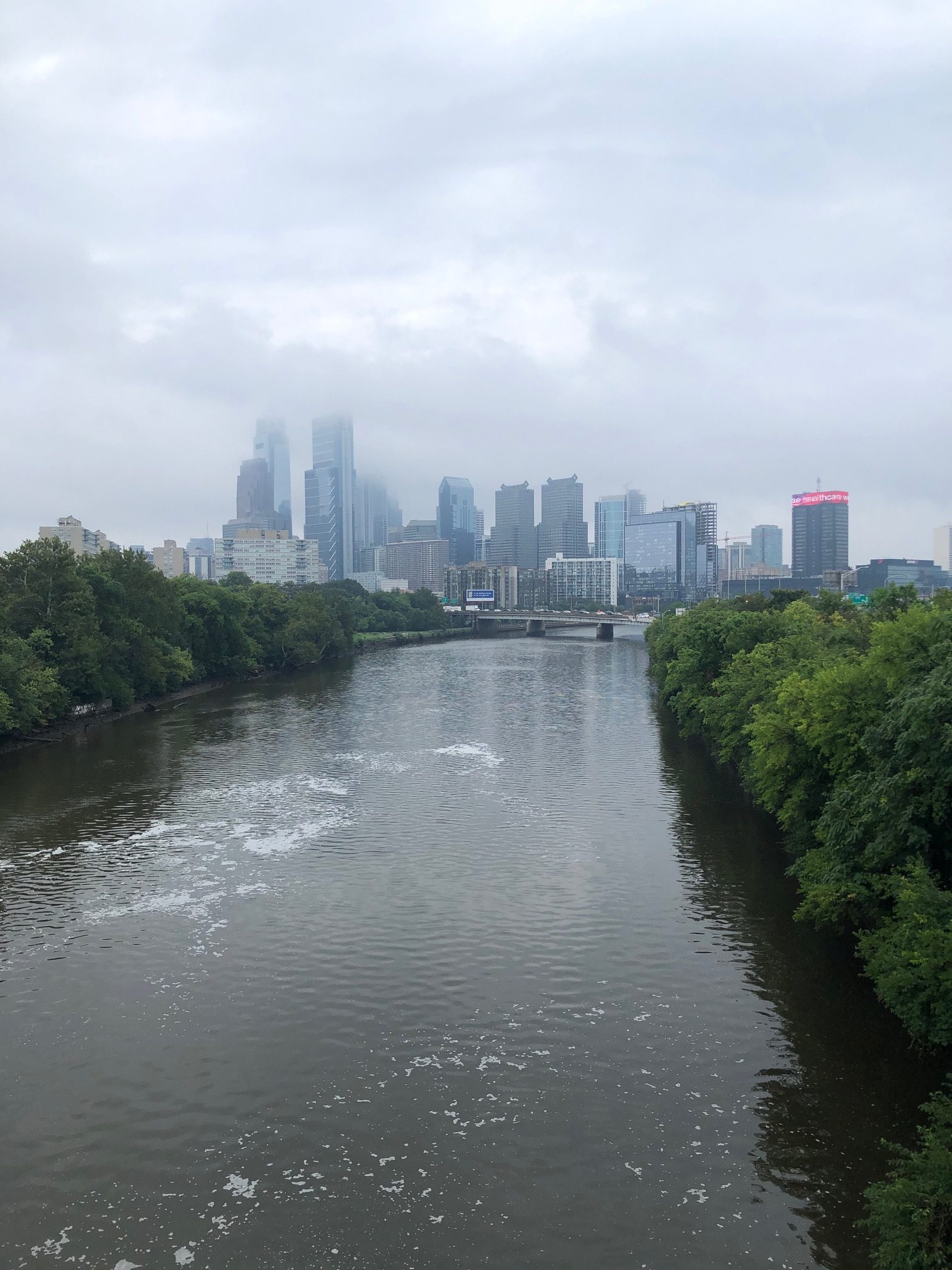
Weds, Eight Mile, RT


Heard this great interview yesterday with Professor Phillip Atiba Goff.
It was this paragraph I was thinking about today:
GOFF: Yeah, and that’s a good thing because in this moment when we’re talking about defunding the police, I think we forget that it was a much quieter movement to defund schools in Black and brown communities and to defund mental health and to defund jobs and to defund architecture and parks. We’ve defunded every darn public good where Black and brown people live, so much so that policing is usually the only public good that we find. So part of the movement right now in terms of how municipalities are working is from defund to refund. These are dollars that should have been going to the community in the first place to prevent the sets of things that have people calling 911.
Getting harder and harder in class. Tried to use these two pieces today:
How a teenager’s video upended the police department’s initial tale
From the article, we read the report and then discussed what the necessity of recording, of witnessing, or documenting the world.
Then I tried to use the closing paragraphs of this article to talk about the process of doing history. Will order this book soon.
One of the things that makes this slender book stand out is Gordon-Reed’s ability to combine clarity with subtlety, elegantly carving a path between competing positions, instead of doing as too many of us do in this age of hepped-up social-media provocations by simply reacting to them. In “On Juneteenth” she leads by example, revisiting her own experiences, questioning her own assumptions — and showing that historical understanding is a process, not an end point.
“The attempt to recognize and grapple with the humanity and, thus, the fallibility of people in the past — and the present — must be made,” she writes. “That is the stuff of history, too.”
I know how this works. Hua Hsu is that good at his job. First I read the article. I’ll be fascinated by the poet, by their work, by the way they describe their work. I’ll track down the first couple of books, get them from the library, and sit down to read.
And it will all go right over my head. I won’t understand the poems at all. Just not smart enough.
Still, the closing quote is as good a description of what I’m trying to do as a teacher as I’ve read:
“You go out and you look in the sky. We live in this act of creation that is unfathomable and overwhelming. The intricacy, beauty, fearsomeness,” he said. “We push back by becoming active, becoming producers, and putting our little pieces of creativity down next to it. It’s this idea, I can do something, too.
“But every now and then, when the flow’s not coming, you gotta get up from your couch or the desk, you gotta go out on the porch, look up at the sky and enjoy the humility of just taking in this obviously superior and more complex creativity. What we do could never match that. Could I ever write a poem as intricate as a pinecone? Wallace Stevens has got nothin’ on this.” (Nathaniel Mackey)
This opening piece from the magazine on social media contains this perfect description:
Late in January, I logged into Twitter only to see that an account I followed had decided to talk about racism. This is a not-uncommon experience for social media: Check to see what your friends are doing or look at cute dogs, and it’s not long before you’re digesting a near-stranger’s analysis of contemporary social issues.
The twist, of course, is that the account is managed by O.J. Simpson.
________________________________________________________________
I’ll use this article with my photography unit in U.S. History. The essay by Celeste NG is superb.
This book review describes a book that I’ll have to read. These passages:
On average, one child is shot every hour; over the past decade roughly 30,000 children and teenagers have been killed by gunfire — recently eclipsing cancer as their second-leading cause of death. (Unintentional injuries, such as those caused by burns, falls or drowning, are the leading cause.)
These numbers suggest the scale of the physical, mortal toll inflicted, but they cannot account for the psychic price paid by kids who live in the dark, long shadows of the aftermath of such violence: those who lose a friend or relative to gunfire; who witness gun deaths at close quarters at a vulnerable age; whose lives, and life chances, are shaped by a premature brush with mortality. And since such children were not struck by a bullet, they are not counted and, at least in any official sense, do not count.
Cox, John Woodrow. Children Under Fire: An American Crisis, (__: Ecco, 2021).