even when you still need help?
We began with this today and drew cartoons illustrating the best ways to do this.
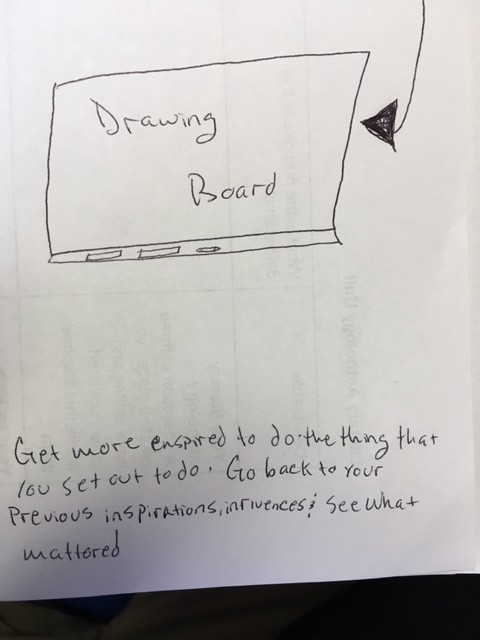
Best line: You return to what inspired you in the first place. Hooray JW!

even when you still need help?
We began with this today and drew cartoons illustrating the best ways to do this.
Best line: You return to what inspired you in the first place. Hooray JW!
I wanted to spend my week in advisory discussing and focusing on the idea of taking control of your own project, of owning a project, of agency. I missed two days last week — the first time in twenty years I missed two days in a row — and there were mixed results. Some students advanced their projects while others did nothing.
It got me thinking about the work I still do that I want a teacher or a coach for as well as the things I do that I’d like to do on my own. And last night, as I worked on a project with my son, which he had put off until Sunday night, I tried to have the conversation about how one takes control of one’s own work, even when you still need help.
How do you take control of your own work, even when you still need help?
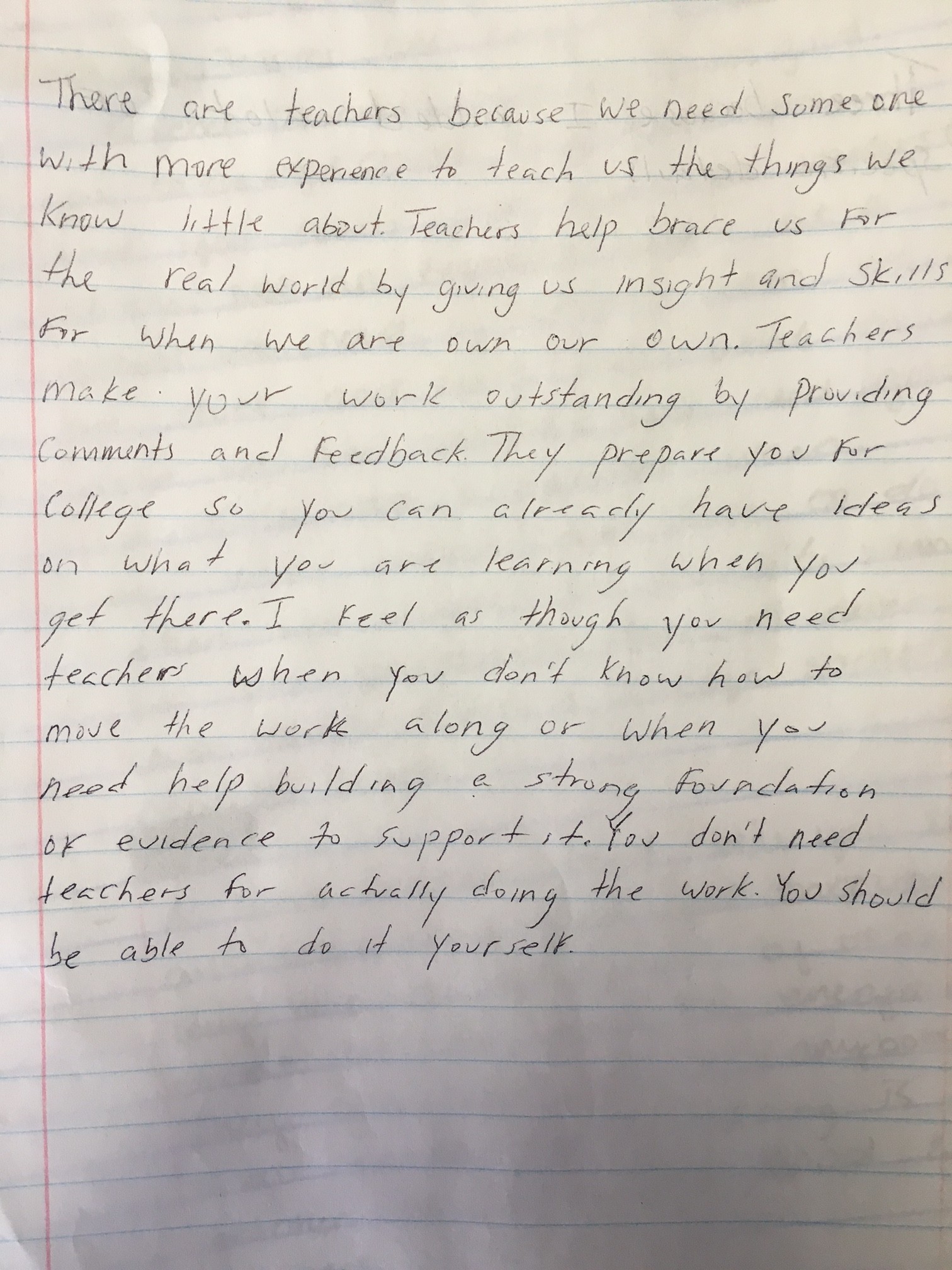
Today, though, I asked the following: why are there teachers? What do teachers do? When do you need teachers? When do you not need teachers?
You need teachers when you don’t know what to do next.
You need teachers when you aren’t self-sufficient.
You need teachers when you don’t know something or a skill.
You sometimes need teachers to simply just monitor students.
You need teachers to help us figure out what we know and don’t.
You don’t need teachers when you have a room of peers to help you.
You don’t need teachers when you’re home.
You don’t need a teacher when you know what you want to do and you can figure it out yourself.
You don’t need teachers to go to the bathroom.
You don’t need teachers to do well on our report card.
You don’t need teachers when it comes time to put into play all of the lessons they’ve taught you.
You don’t need teachers when you’ve learned enough to teach other people.
One place we went quickly in the conversation was that there are “teachers who aren’t in schools” and that “you can learn from people who don’t have much education.”
Mondays are always hard. Always hard. I try to focus on recovering the culture of the room and helping everyone remember the in-school expectations.
This morning I tried to begin by having students nominate themselves and one peer for an “expert board.” My goal was to have a list of students that we can turn to while we are working on projects. I also hoped that describing two of their own traits and then one of their peers’ great traits would rebuild the culture as well, as they reflected on what each person at the table might bring to the projects.
There was enough morning chaos that I had to pull their answers and read (anonymously) the list of skills that kids would bring to all of our projects.
When things are going well, you’re debating what professionals debate. As we work our way into our oral history unit, I felt as though the students were torn: do you find a person to interview and make the center of your oral history or do you find a theme that you’re interested in and then start conducting your interview.
This is an old dilemma for historians. You may want to study something but do not have the sources to pull it off. You can be as creative as you like with the sources you do have, whether they’re documents, statistics, shards of pottery, newspapers, but you can’t write history without sources.
In our conversation today, that’s exactly the issue the students circled, explored, and churned through. Some students seem committed enough to their theme that they’ll keep asking folks until they find a great source. Others want to talk with Grandma so much that they’ll move their theme. Others became aware that no matter how much they want to study something using oral history, in some situations it will may be possible. A couple of examples: interviewing people they have not met will require extensive leg work and interviewing dead people isn’t possible. Yet.
Life is full of people urging you to do your best. Schools are full of posters, teacher voices, and dutiful students echoing the idea that you should always do your best.
Knowing we have another day of testing and knowing that these tests can show that a project-based approach can generate academic gains,i.e., it’s important for everyone to do their best. Sigh.
What I tried this morning was to ask everyone to reflect why it’s important to always do your best but also when you might need to “shut down the engines.”
I wanted to think about whether it’s possible to always do one’s best. I wanted to think about when compromises have to be made. I wanted to think about if there are moments where other forces are at work. I wanted to think about which standards students should aim for and what those standards might mean. As always, I wanted to think about how I/we want to be known.
We do the MAP tests three times a year. This is a good test. It helps measure growth and can offer proof that an interdisciplinary, project-based approach fosters the development of academic skills.
It’s still a test, though, and brings up all the rage or at least frustration students tend to feel about tests. While our advisory talked about growth targets last week, we began today by thinking about a question I hope fuels third quarter: What inside you do you need to get out to the world? What do you want to show the world? (For some reason I had a bad Cat Stevens song stuck inside my head, not a good one.)
Here are the responses:
I want the real world to take the projects I create seriously and learn from them…I want them to mean something. MH
I want to learn something new. JH
I want people to acknowledge me and what I do. JF
Third quarter I think I need to get the part of me that is caring and shows that I care about the people around me. TJC
I need to give the world the projects we do. BR
I would like my perspective to get out into the world. JW
(I want to get the…) story of what we do and what we do to help others (out into the world). TC
I want to get my commitment to projects into the world. When I start a project, I commit myself to it until it is done (or until I run out of time). ES
This quarter I want to show that I can get my work done. CB
I can’t keep this project in any longer…I know people will love what I’m trying to do and will want to be apart of it. HG
I want to be more of a leader, a positive leader, this quarter because I know I can make it happen. JJ
I want to show how we can make the community better. DL
I have to erase these quotes from the entryway of our room,
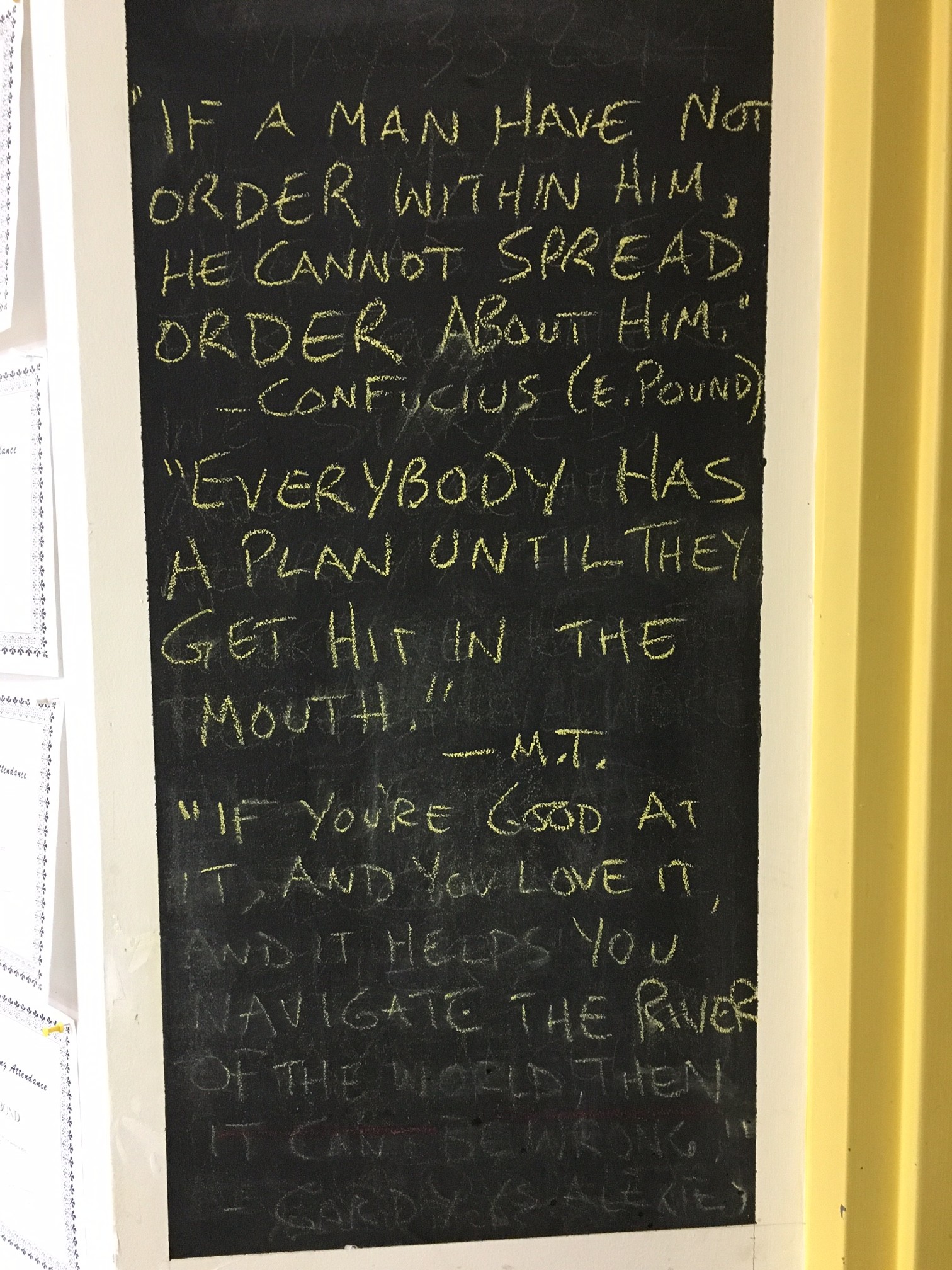
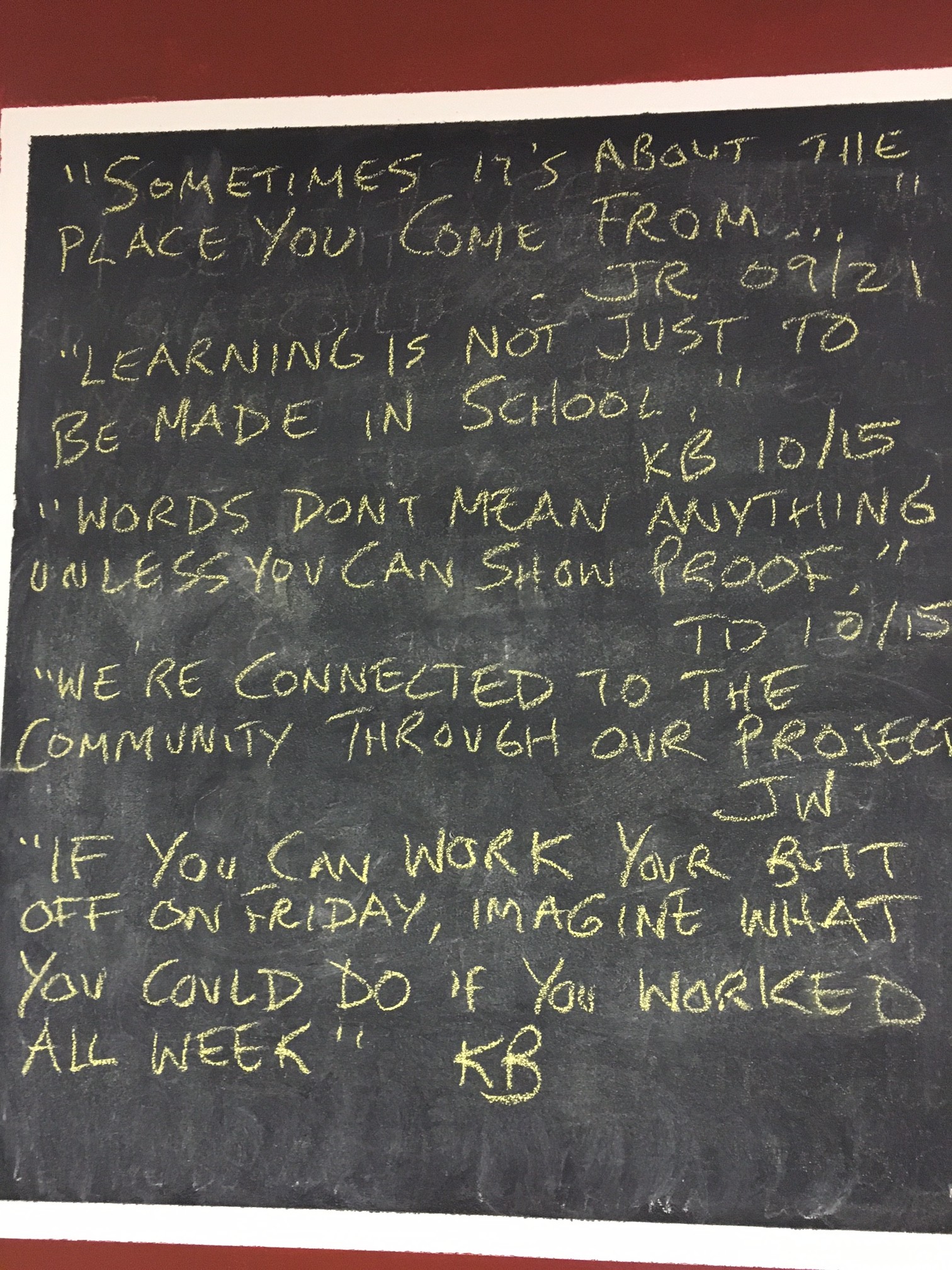
I have to erase this collection of student quotes,
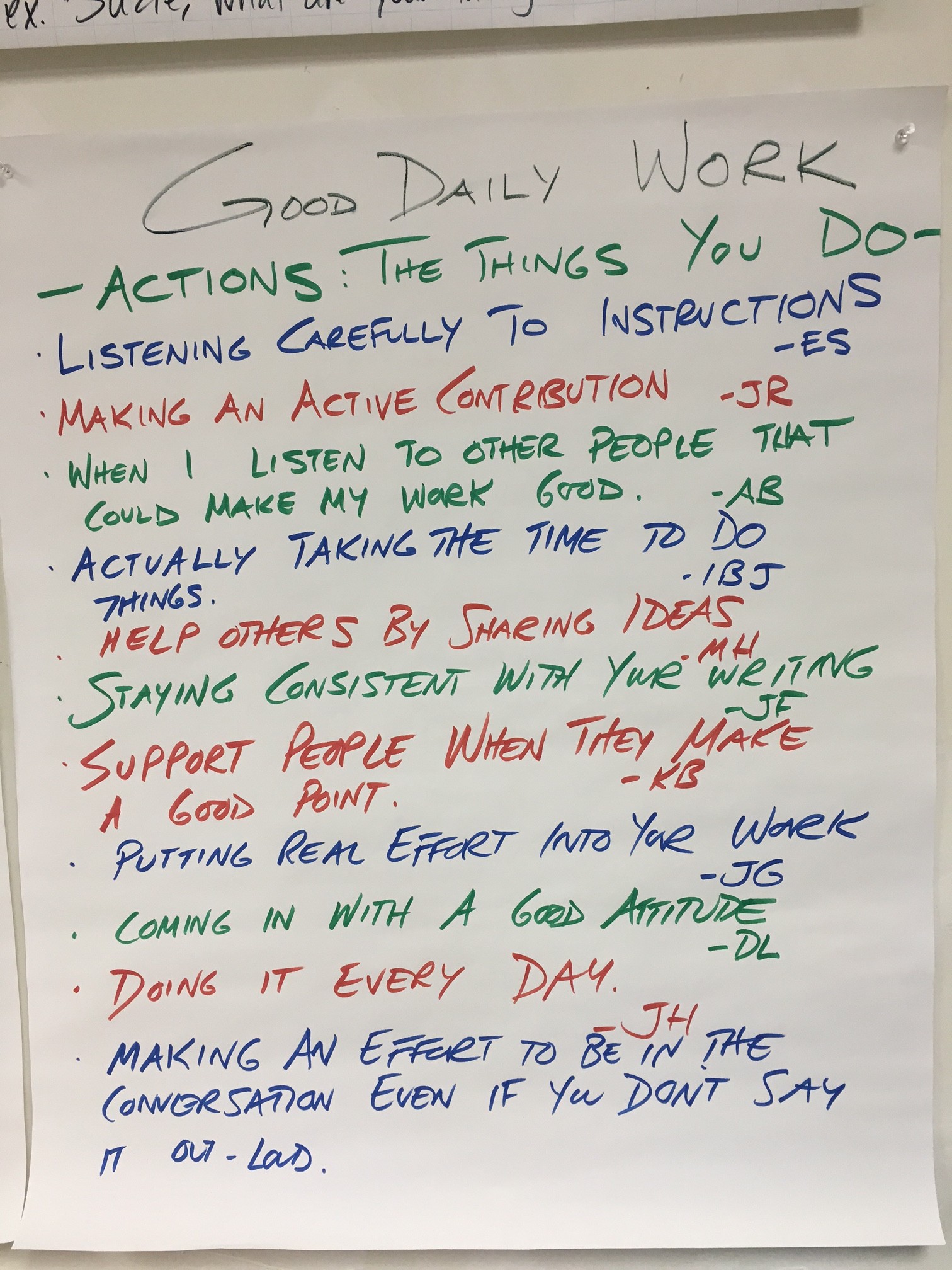
I have to hide this student-created list of what constitutes good daily actions,
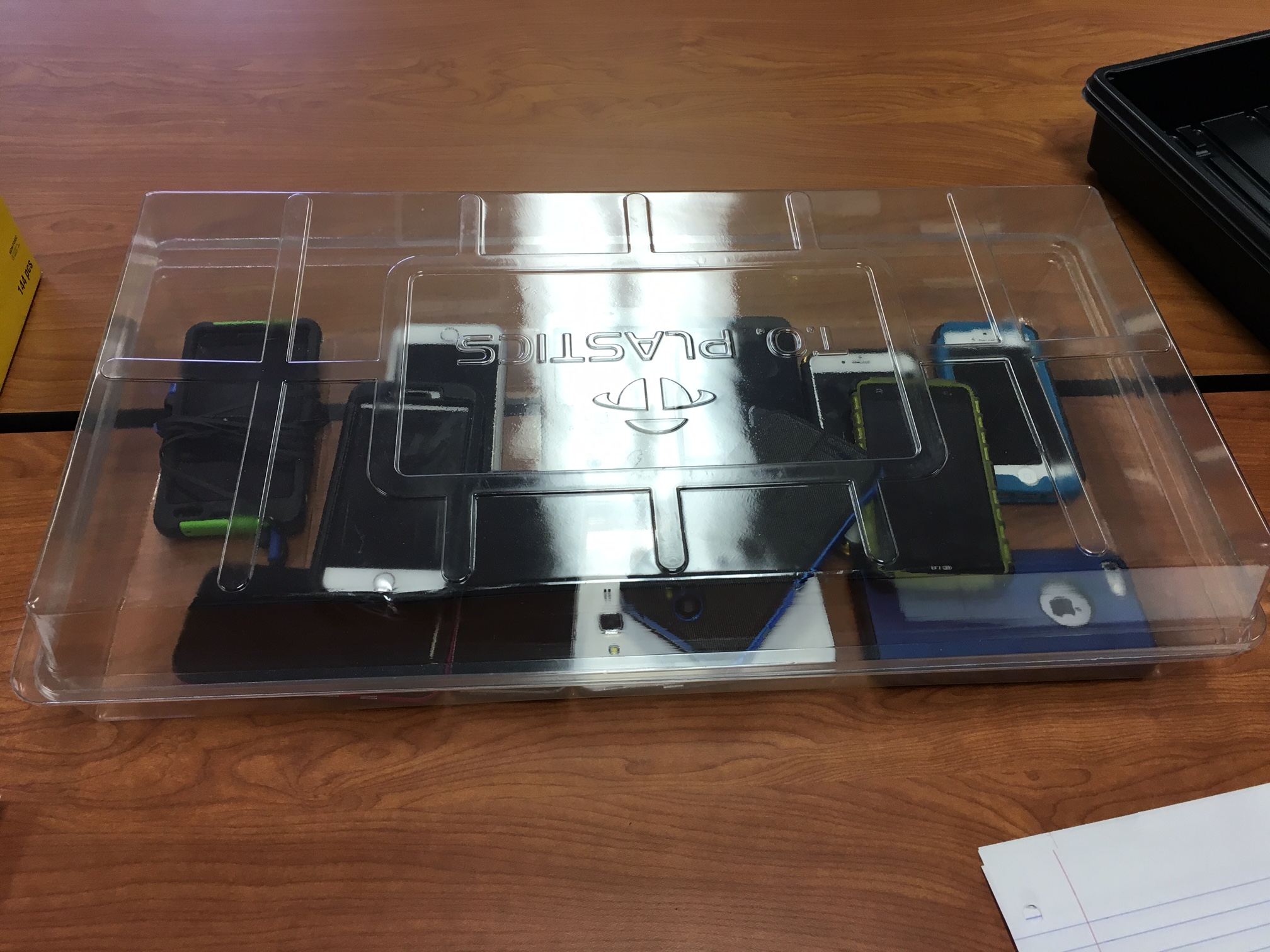
So that I can collect all of their phones in a seed starting bin,
and administer an algebra one test.
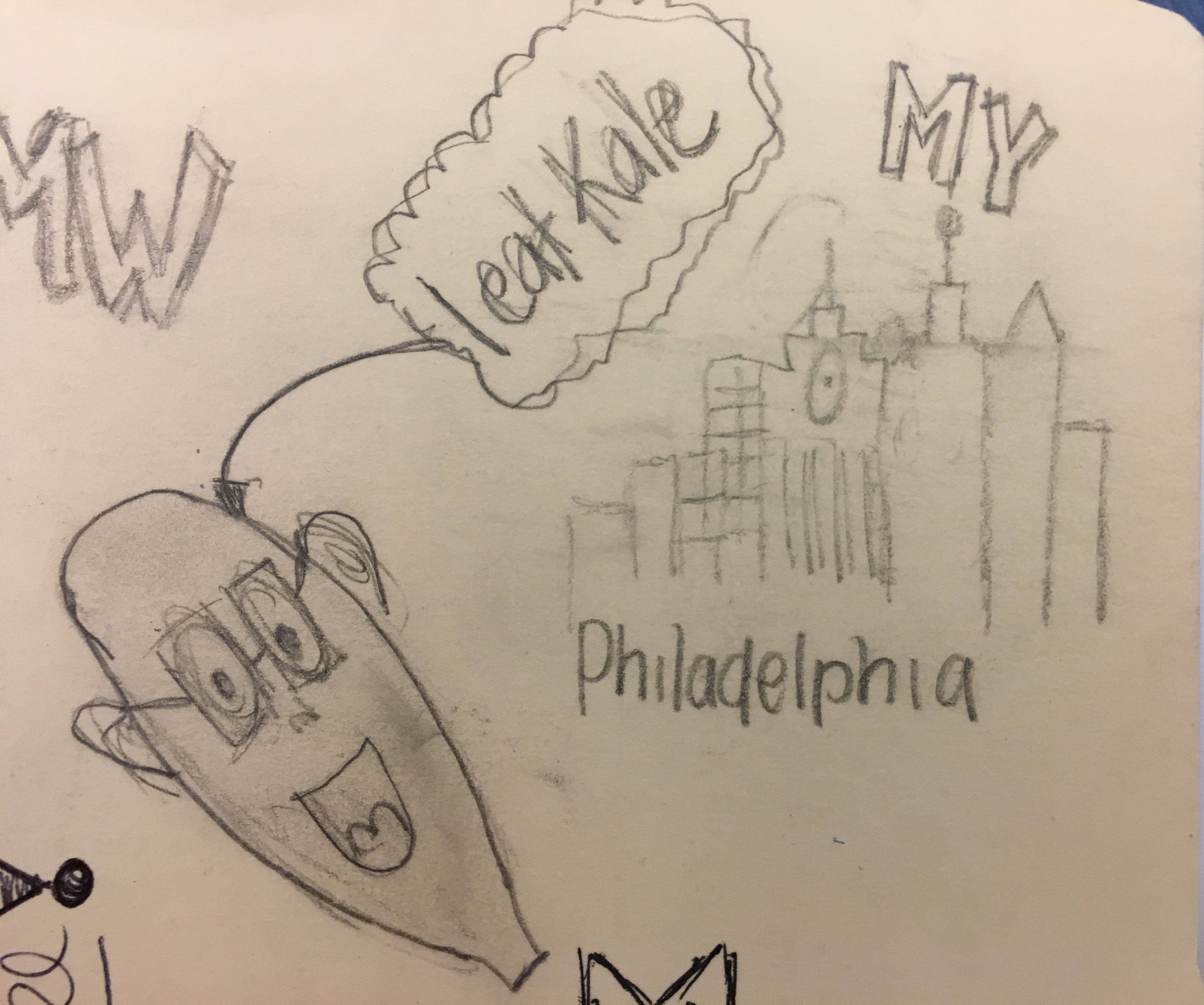
I eat kale.
K. Anthony Appiah on whether someone should send their child to a bad public school.
vs.
Allison Benedikt writing in Slate.


