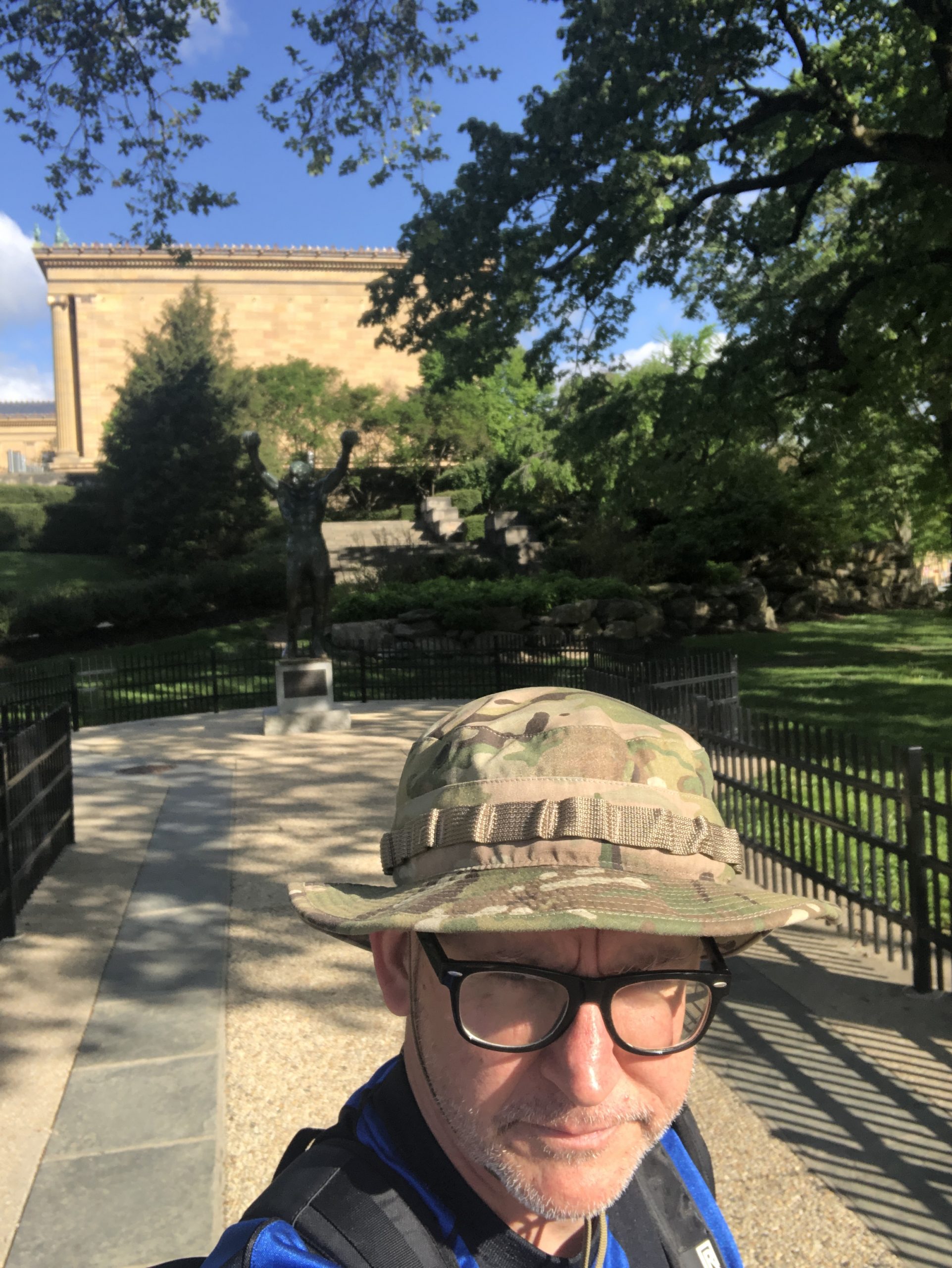
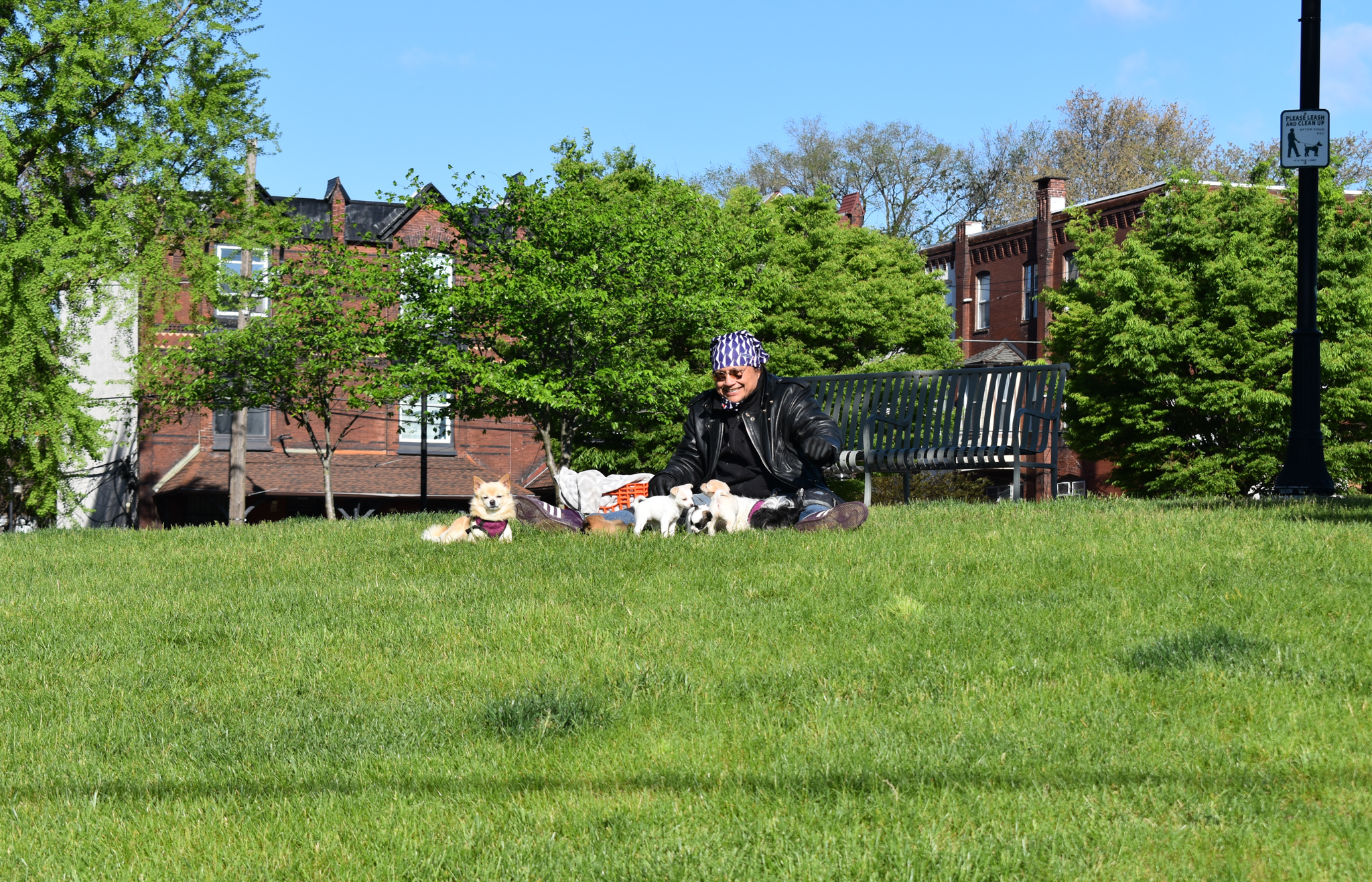
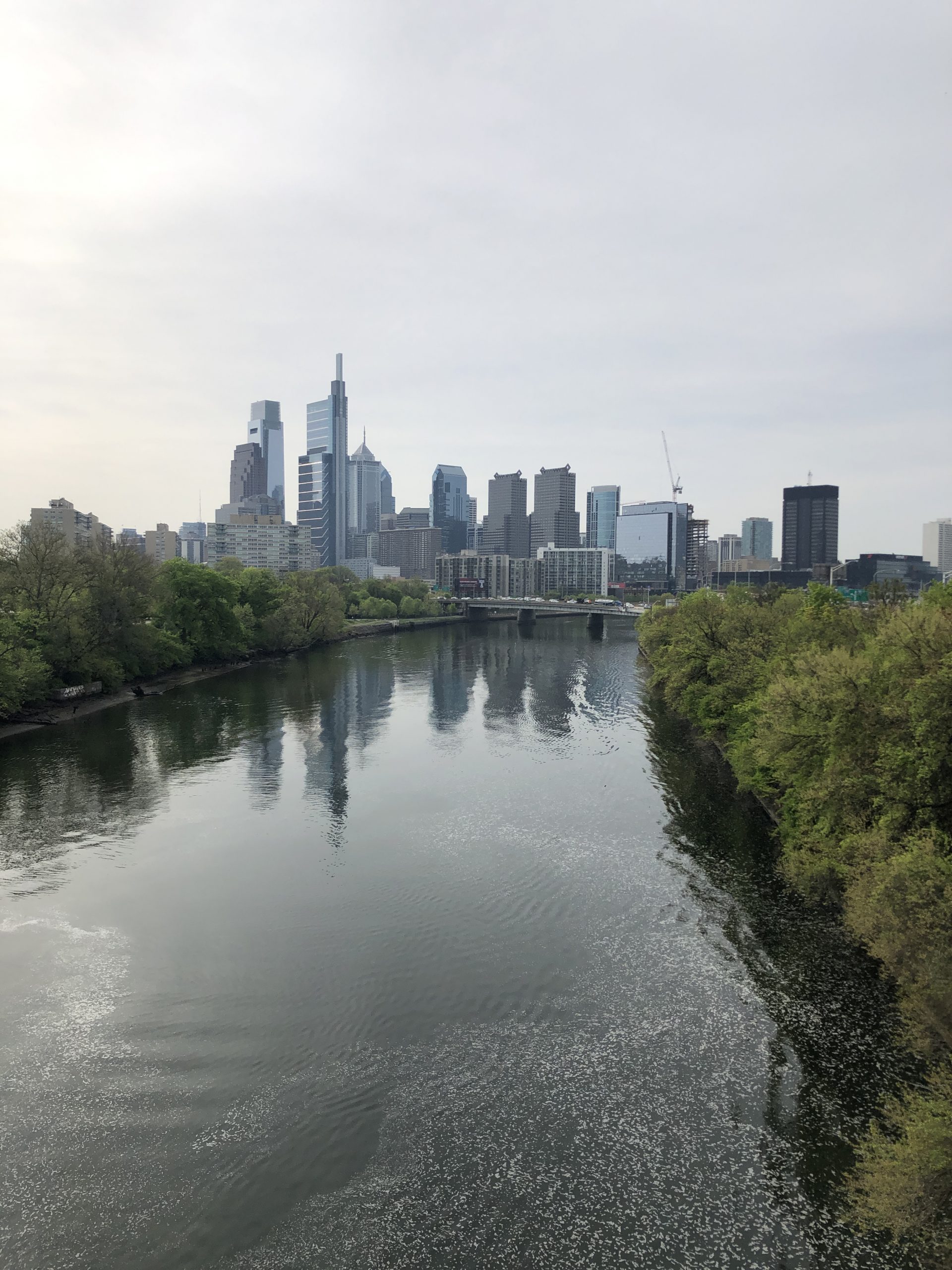
Just me and a statue of WW. On a cruddy piece of grass tucked by the expressway.
“…how easily life can be one thing rather than another and how accidentally a destiny is made…on the other hand, how accidental fate may seem when things can never turn out other than they do.”
(As I read the third round of Gatsby essays, this time on the American Dream, and feel the same ideas bubbling up, many of which flow directly from a google search of “Gatsby American Dream” or “Gatsby Opportunity”, I’m wondering if next year if I shape the essays as a response to quotes like this. ).
Roth, Philip. The Human Stain.(Boston: Houghton Mifflin Harcourt, 2000), pp.125-126.
What the reader wants to know is not what you plan to say but where you stand. They need some assurance that your point of view promises fresh illumination. They listen to your tone of voice, which conveys your intentions more quickly and clearly than a summary outline of the forthcoming composition. A vigorous introduction, therefore, will seek to establish not so much the subject matter to be addressed as the author’s way of addressing it. It will announce or at least prefigure the argument the author plans to pursue.
Lasch, Christopher. Plain Style: A Guide to Written English. Edited by Stewart Weaver. Philadelphia: University of Pennsylvania Press, 2002.

If I were running PD, I might try this activity. First step: make a list of all the verbs that describe what’s happening in your classroom. Then try to cluster them together.
Second step: Now do it for zoom school. It’s much harder to come up with actions and much easier to come up with descriptions. (The other option would be to run and make copies and then cross out the verbs that aren’t happening in zoom school.).
Third step: Knowing that everyone is utterly exhausted and frustrated, what are three concrete things could you do to bring the verbs from the first drawing to your Zoom class?
With my advisory, or even one of my classes, I’d love to see both student versions of this, i.e., sleeping, watching (TV), Tiktok’ing, surrendering/giving up, screaming (at the technology).
Friday, in English, spent the period pondering origin stories. What work do they do? How do we tell different versions? What shorthand do they provide, i.e., when someone says “I’m from Boston“, what work does that do? When I talk about my parents having “met in San Francisco in the 1960s” how does that differ from describing a “daughter of Catholic Delco” and the “son of a TV/Radio repairman from the Altoona area”?
I had cooked up this playlist — still working on it — as a way of sharing a few songs about the claims we make about where we come from. I’m sure that folks have other suggestions (my colleagues added a number…).
(Clapper what u know about Drake/Crying emoji x2).
All of this was in service of setting up chapter six of Gatsby, where we meet James Gatz for the first time, and learn the story of what happened before he met Daisy.
A good conversation. At least a portion of the class wanted to get back to the “is this love or is this obsession” conversation; several versions “creepy vs love” and “weird vs. love” emerged.
Next we’ll have the idea vs. reality conversation; is Daisy an ideal, much like Gatsby’s new identity?
I also need to circle back to the new money vs. old money and the markers of class. Always use this video for that discussion; most humans know the feeling of being caught out for various reasons. Like Gatsby — my God the man means to go with us — we likely have some memory, some idea, some lingering embarrassment.
Hard to know if I’ll listen to this or not. I would like more shots of that home studio. But this quote:
“In our own ways, Bruce and I have been on parallel journeys,” Obama says in the first episode. “We still share a fundamental belief in the American ideal. Not as an airbrushed, cheap fiction or an act of nostalgia that ignores all the ways that we’ve fallen short of that ideal. But as a compass for the hard work that lies before each of us as citizens.”
Another Thursday. These are tough.
Podcasting began with laying out the timeline for our entries into the NPR contest. The due date is March 11th, so I had laid out a series of assignments that will hopefully get kids across that finish line and maybe even generate a winner. There were some terrific ideas. Of course, we’ll be making these in a Pandemic, so the ideas are confined to what you can pull off around your house.
But in both podcasting and English I was reminded of the difficulty of teaching technical skills (for lack of a better term.). In podcasting, I’d love to be able to teach smooth audio transitions within their pieces, which is absolutely necessary, but I don’t know how to do this on-line, when pretty much everyone is using different audio software. Similarly, in English — more on this later — I was trying to get everyone thinking about how to set up and explain a quote.
Both of these skills require two steps: the work the community does to identify what it looks like when done well and then an individual working to do it on their own. In person, I facilitate the first step, spiking the punch when I need to, and then look over kids’ shoulders for the second. On zoom, I try to facilitate the first step while having no idea whether it’s working, and then get super frustrated at how overstimulated I am as I attempt the second while having no shoulder to look over.
(Note: for podcasting next year…I’m going to have to fundraise to get more than a few computers with real audio software (I love Hindenburg for this work) so that we can all have one learning curve together.)
In history, my opening activity went better than I expected, as we compared the process of finding truth in a courtroom versus finding truth as historians. Lots of great ideas.
E. pointed out the group dynamics of a jury and how that might compare to communal understandings; he also underscored the nature of rules.
A. highlighted the tensions of a courtroom; the combative nature of a trial (I offered the notion of an adversarial relationship in trying to get to the truth.)
A. suggested that there were rules around evidence and questioned what happens when evidence doesn’t exist.
D/M: both pointed out that issues of power emerge in a courtroom — politics, race, class, gender, wealth might create bias.
I then modeled potential approaches to the “Truth Toolkit”. As I was doing it, I came up with another idea — a kind of map, modeled after the sort of novelty maps you find in restaurants down the shore. This idea was spurred on by A’s even better idea of thinking of it like a children’s menu at a restaurant. I’d love to see that.
Our last activity was to look at the Table of Contents from two books: E.H. Carr’s What is History and Oscar Handlin’s Truth in History. In groups, they had to generate questions that, based upon the chapter titles, might be required to come to the truth. These documents came out fairly well. Thanks to S. for highlighting the Carr chapter on morality and the Handlin chapter on “Good guys and bad” to provoke an exchange on how we see humans.
It’s funny — the assumption I’m fighting against, the one I need to do a journal entry next week to get after the most, is still this idea that everyone is entitled to their own truth. I can’t go at it directly but I need to do something next week where they explain why this is right and why this is wrong. I also need to finalize the benchmark, not so much the project, but the materials to be used to make the project. If they’re going to create a booklet with the purpose of exploring the truth around a public policy, I need to make sure I’ve got enough of a structure to prevent the arrival of sixty-one wikipedia articles.
Ate some lunch then came back for English 3. Had some luck with the opener — how did these three themes come into your life over the past three days — and then tried, unsuccessfully, to practice doing two things with quotes from Gatsby:
1. Set the quote up.
2. Explain its significance in as succinct a way as possible.
I did this on chats. Maybe not the best approach. Had a document ready for this process. Also not convinced that’s the best approach. Maybe try a google form with the other stream tomorrow?
We then had a reasonably good time working our way through chapter two. The “Nick is actually gay” interpretation broke out much earlier this year than the past two years. I don’t have a problem with this interpretation — or any interpretation — if it’s rooted in a close reading of the text, and a reflection on Nick’s identity would provide ample material for either of their short essays on opportunity or authenticity. One notion that’s huge in adolescent/human minds is staying true to yourself and they’re alert to the moments when these characters betray themselves or they stated ideals. (Alas, now that I’m old I know that we all skate on the edge of hypocrisy with each action we take and that any true self of my own is complicated mess, shifting each day…).
This is also one of the moments where I wish there were countless teacher memoirs that you could look at; if you were teaching Gatsby twenty years ago, when did this interpretation occur? Or what did the day-to-day conversations look like in a classroom fifty years ago, when a teacher worked their way through these sorts of novels. Yeah, I get it, maybe there was no conversation, but still, what were they talking about and doing? How did the students of the mid-1980s respond — Greed is Good, It’s morning in America — to this book?