All posts by history

Only in Philadelphia

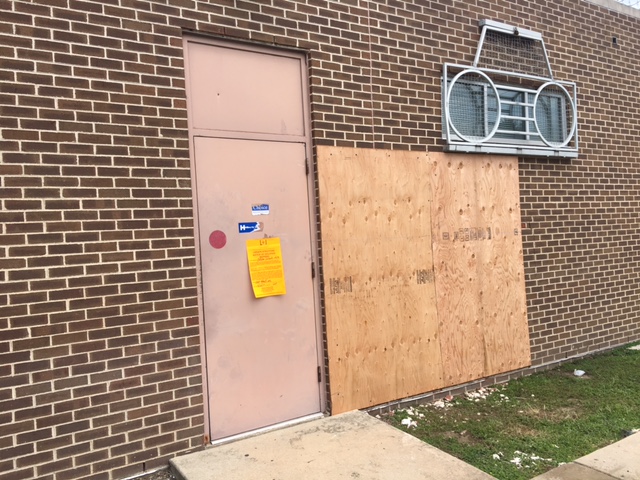
Only in Philly do you congratulate yourself on identifying the only DMV that’s open on Monday’s near you only to arrive and find the office closed. Because someone crashed their car into the DMV building. Through a window and door.

I get that people use that lot to practice driving, but seriously, you can’t make this up.

Quote on resilience

From a terrific novel, Universal Harvester:

If you work with or around children, you often hear a lot about how resilient they are. It’s true: I’ve met children who’ve been through things that would drive most adults to the brink. They look and act, most of the time, like any other children. In this sense — that they don’t succumb to despair, that they don’t demand a space for their pain — it’s very true that children are resilient.

But resiliency only means that a thin retains it shape. That it doesn’t break, or lose its ability to function. It doesn’t mean a child forgets the time she shared in the backyard with her mother gardening, or the fun they had together watching Bedknobs and Broomsticks at the Astro. It just means she learns to bear it. The mechanism that allowed Lisa Sampson to keep her head above water in the wake of her mother’s departure has not been described by scientists. It’s efficient, flexible, and probably transferrable from one person to another should they catch the scent on each other. But the rest of the details about it aren’t observable from the outside. You have to be closer than you really want to get to see how it works.

John Darnielle, Universal Harvester (New York: Farrar, Strauss and Giroux, 2017),137.

What to remember about democracy

In the dark days of January:

* Keep trying for the process
* It’s supposed to be hard.
* Set aside to do this work; why are we doing it?
* Maintaining intentionality in the work.
* Constant thinking about what’s up for debate.
* Is the process everything?
* Finding democracy in the way we treat people.

It was a good opening circle.

Defining democracy in nine minutes

My colleagues were brilliant. Here’s mine:

A system where all participants are committed to goals developed in common, where all participants are committed to civility and respect in encouraging and honoring all voices, where consensus is a goal but not a necessity, where authority emerges out of the work the group has done together, and where the work of the community is a constant, evolving process.

Notes from Age of Opportunity

I enjoyed reading this book.

Two quotes:

118 “I also object to the “skills” portion of “noncognitive skills.” Determination, perseverance, and tenacity aren’t skills, like riding a bike, using a word processing program, or playing a G major scale on the violin. Determination, perseverance, and tenacity are capacities to be nourished, rather than skills to be acquired.

The distinction between skills and capacities is vital, because intellectual abilities and the drive to succeed are cultivated through entirely different processes.”

204 “I don’t harbor any delusions about the use of scientific evidence to inform policymaking, though. Policymakers and advocacy groups use science the way that drunks use lampposts –for support, not illumination. If the political will is absent, no amount of science, no matter how persuasive it is, is going to change the law.”

I also was fascinated by the discussion of “Mental Contrasting with Implementation Intentions.” This is what we do now in advisory, but not necessarily in a systematic way. I look at this blog over the past three years and most of the activities I’ve designed have been based on this idea (think of a goal, best thing that would result, obstacles, plan). (p.160 in Steinberg. Here’s the link to the study.)

Laurence Steinberg, Age of Opportunity: Lessons from the New Science of Adolescence (Boston: Houghton Mifflin Harcourt, 2015).

Bucks County thoughts

The terrible tragedy in Bucks County has taken up most of the front page of the Philly papers for the past couple of weeks.   It’s an awful story.   Four young men are dead and two young men are going away for a long time.

Questions I’d like answered:

How many other murders has the city experienced in 2017 where one person involved with drugs shot another person involved with drugs?  I can see that there are 166 murders as of July 15, 2017.

Have there been other individuals who have acted in concert to rob people attempting to buy drugs who have ended up killing them?

How many murders in Philadelphia have had this kind of extensive (and basically inept) cover-up by the perpetrator?  Is this a common thing or do we just know the details because of the reporting?

How many other murders have been on the front cover of the Philly papers this year?  How many of these murders received coverage over multiple days?  How many of the victims received this kind of coverage, detailing their successes and past lives?  All four of these young men were attempting to buy drugs.   Let’s say they had never dealt drugs before, that they were truly great kids, and made a single, tragic mistake.   How do I teach my own children, my own students, that you only get one chance, that there’s no margin of error for them, that anything that’s too good to be true probably is too good to be true?  How do I teach them to run away from anyone making an offer like this?


What we’re after

This article details a new business that has an elegant solution to a complicated environmental problem: desertification.

Money paragraph:

The cocoon is a bit deceptive in its seeming simplicity: a good deal of high-tech thinking went into it. “Everyone likes biodegradable,” Ruys said, “but it’s actually a tricky concept. You want a thing to work over a period of time, then completely disappear. It’s hard to do, which is why, as consumers, we still buy plastic.” Ruys solved the problem with a particular kind of wax coating that dissolves at the right time. He also spent a lot of time developing a wick that would precisely feed water to the plant.