Building some stuff

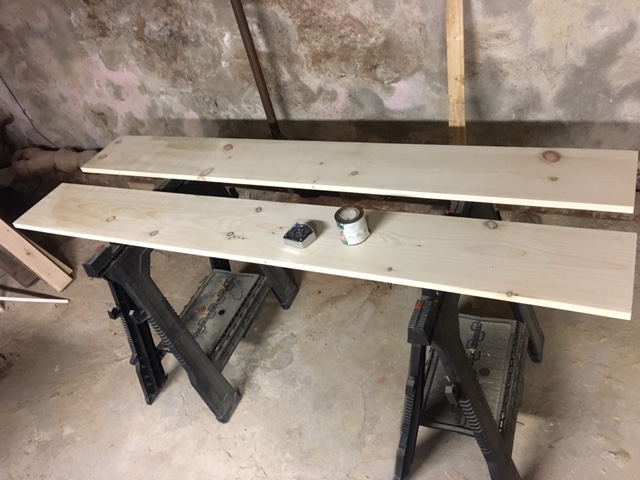
I saw this in a Crate and Barrel catalog. I’m going to build a smaller version for our living room. I’m going to use 3/4″ pipe and flanges in the middle instead of that iron bar.

Challenges/things I want to learn:

*These finger joints on the end — I want to make a smaller version.
*What did people do before Home Depot’s/Lowe’s selection of crappy milled wood? Are there lumberyards where everything is cut well so that you don’t have to spend twenty minutes finding the least bad pieces?

Re-reading David Blight

Saw the latest Twitter blast and had to pull Professor Blight off the shelf. From the prologue:

“In many ways, this is a story of how in American culture romance triumphed over reality, sentimental remembrance won over ideological memory. For Americans broadly, the Civil War has been a defining event upon which we have often imposed unity and continuity; as a culture, we have often preferred its music and pathos to its enduring challenges, the theme of reconciled conflict to resurgent, unresolved legacies. The greatest enthusiasts for Civil War history and memory often displace complicated consequences by focusing on the contest itself…

Over time, Americans have needed deflections from the deeper meaning of the Civil War. It haunts us still; we feel it, to borrow from Warren, but often do not face it.”

David Blight, Race and Reunion: The Civil War in American Memory(Cambridge: Harvard University Press, 2001), 4.

Richard Sennett, part two

Finished reading yesterday and thought a lot about his distinction between authority and autonomy within a workshop. (Much joy at having a chapter called The Workshop).

This is the question we grapple with all the time. You want kids to become autonomous but you know that they’re not always ready. If you turn them loose too soon, you lose them, and it’s project-based learning going wrong. If you assume too much authority, it pretty quickly devolves into school and disengagement. We spend lots of time in PD discussing the nature of authority and how it’s earned; as teachers in a project-based school we have a number of our own projects that should serve as a model and as a source of authority.

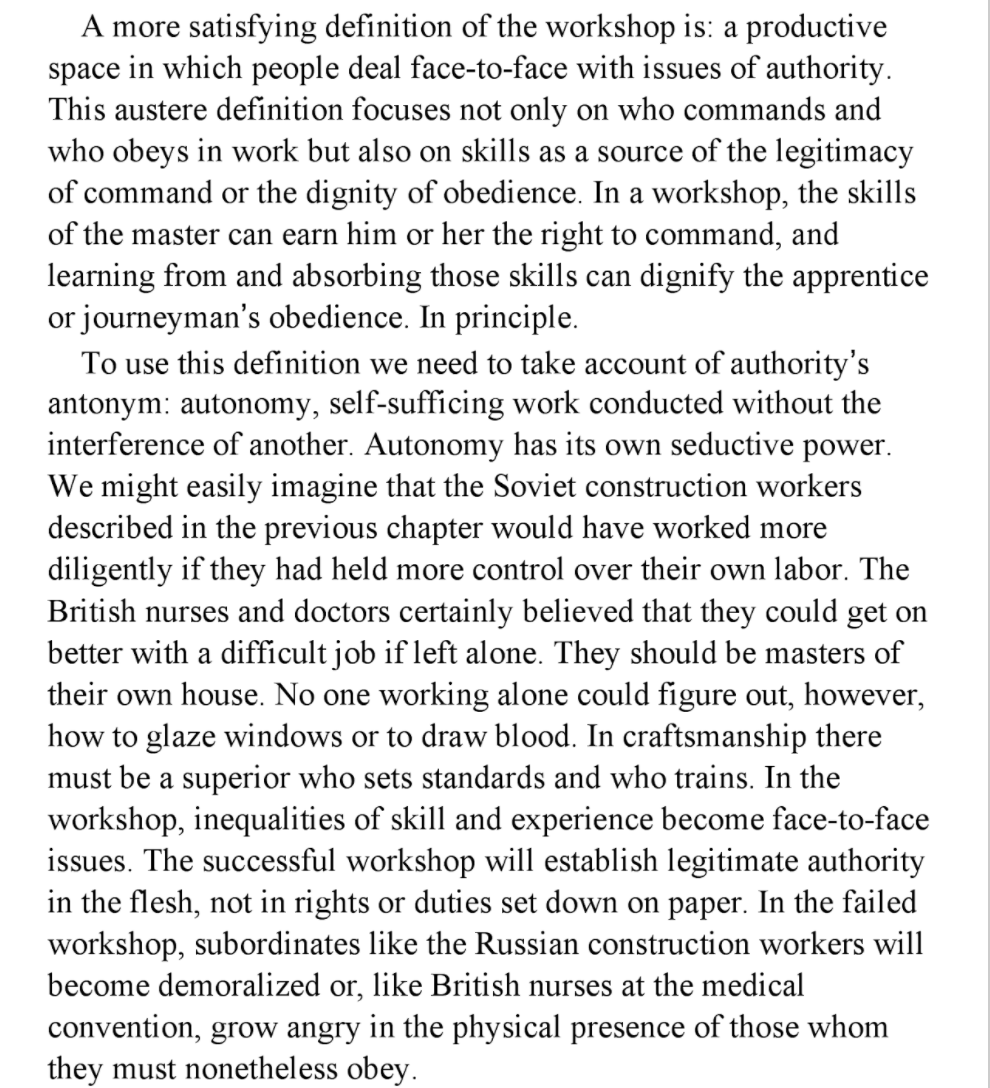
I’m lazy, so I’m not typing this entire quote, but here it is:
I’ll use these two paragraphs in our opening week as try and figure out what rules the school sets, what expectations I have based on my authority as a teacher/project makes, and how they can begin to establish “legitimate authority in the flesh.”

Richard Sennett, The Craftsman (New Haven: Yale University Press, 2008), 54.