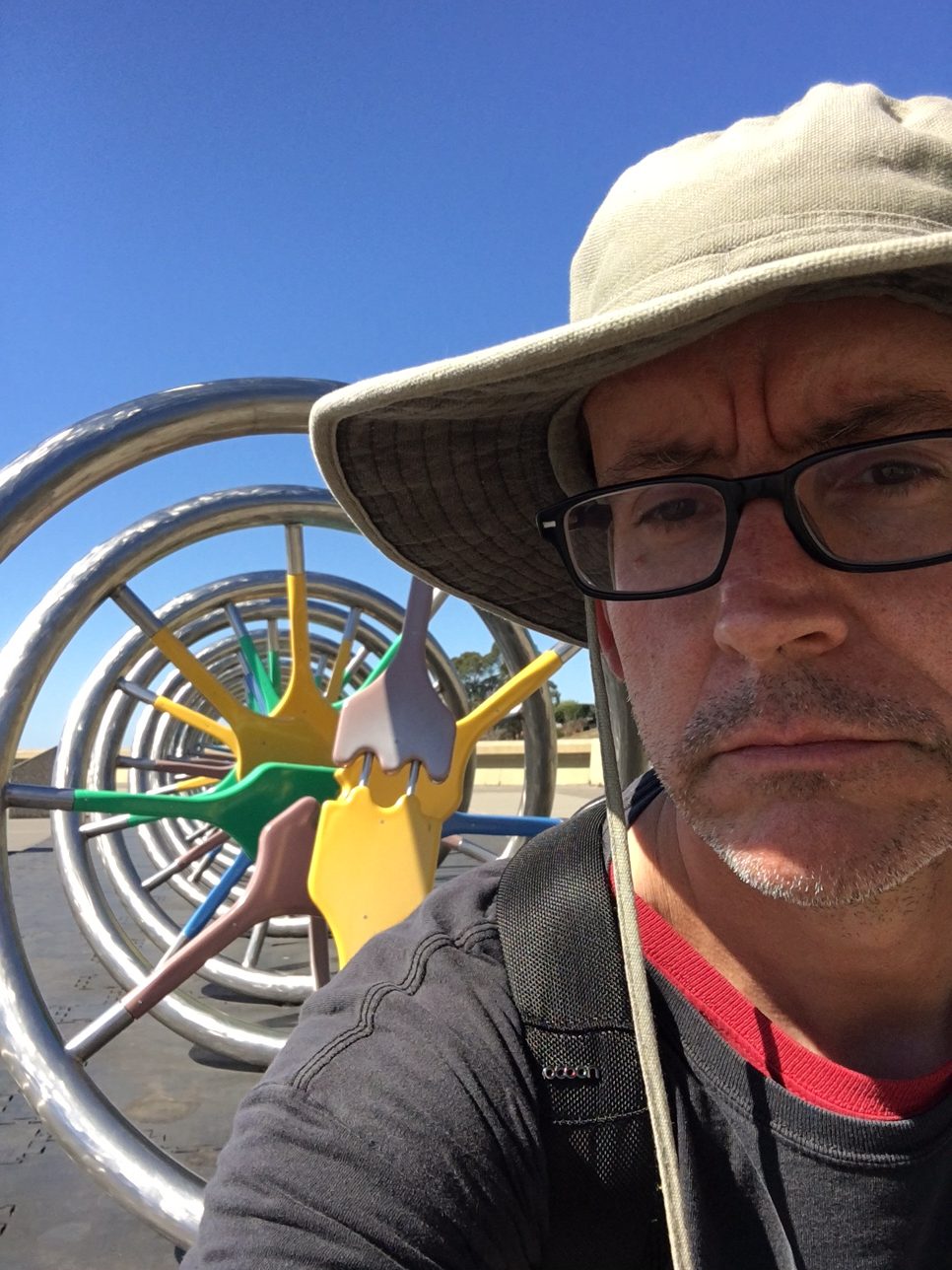
Wake up in crummy hotel. Realize that the reason why this crummy hotel was expensive and the only one available was because it’s parent’s weekend as well as homecoming. Realize that this is the case because the cruddy breakfast with surprisingly good coffee is packed with parents. You’re as old as they are but your children are 2,800 miles away and six years from college.
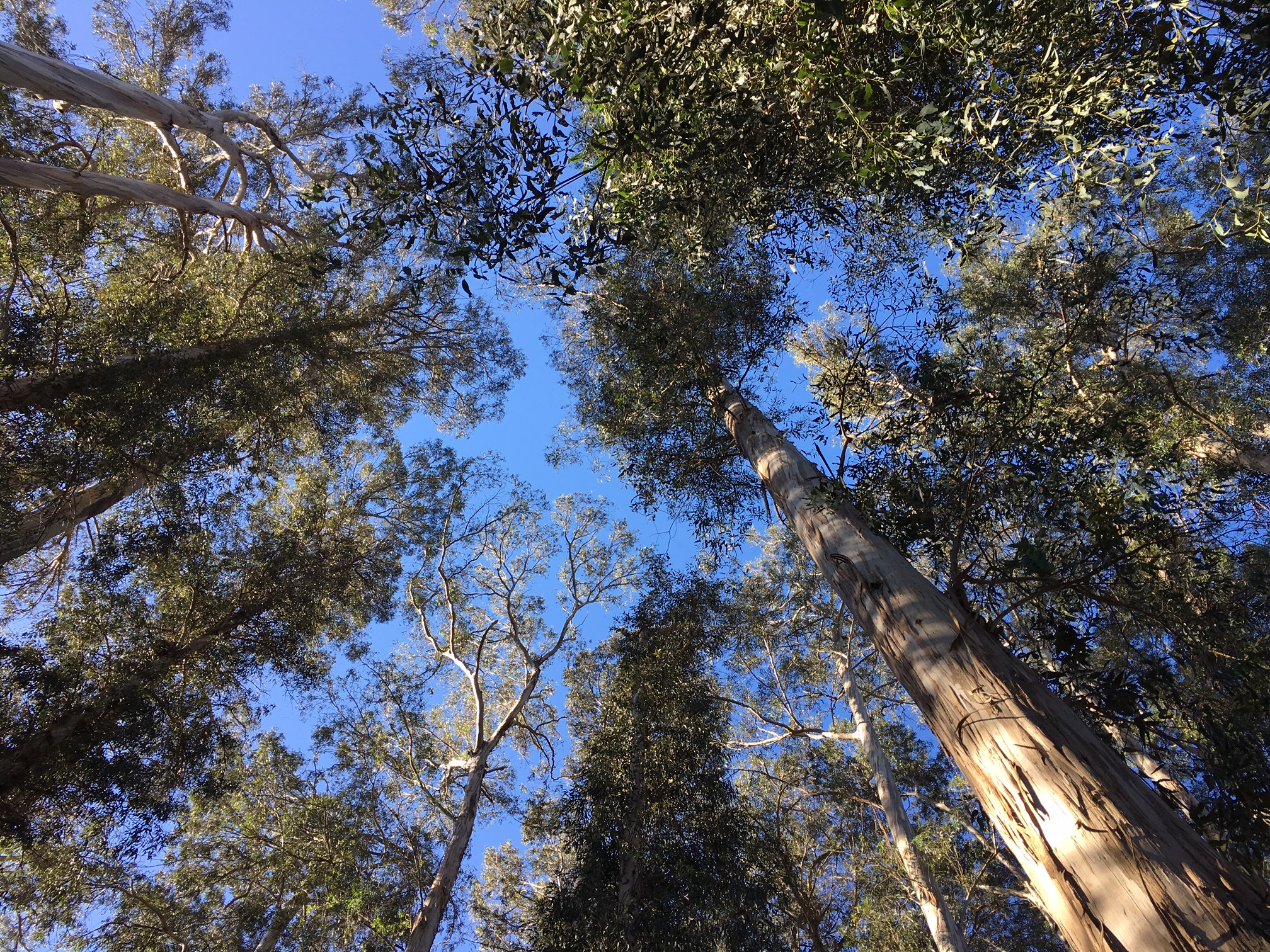
Walk through the crisp air to the Cheese Board Collective. Get a large coffee and four awesome rolls. The best one is by far the “Chocolate Thing.” Walk into Berkeley’s campus and sit in Eucalyptus grove. Damn, these trees are big.
Get call from Uber driver from yesterday who is kindly bringing keys to Berkeley. Scurry back down out of campus. Give dude $50 and lots of gratitude.
Walk back onto campus. Wander a bit and remember reading something about a favorite historian — Leon Litwack — and find that a collection of his books is in the undergraduate library. This is an amazing show. There are some first editions and it was as good a way of assessing the written history of African American life as you’ll likely find. They were also showing professor Litwack’s short, terrifying film of Bitter Fruit. I always liked reading about Professor Litwack because of his long and well-known commitment to teaching the survey.
This library, though, is something else. There’s a collection of Berkeley related documents from the National Park Service on display, too. And there’s a collection of comic books from all around the world. Best yet, there’s a frenzied book sale going on. I pick up a great paperback edition of Let Us All Praise Famous Men and a mint, hardcover edition of an OUP book on Mario Savio, which Berkeley must have bought millions of ’cause there were three at the sale.
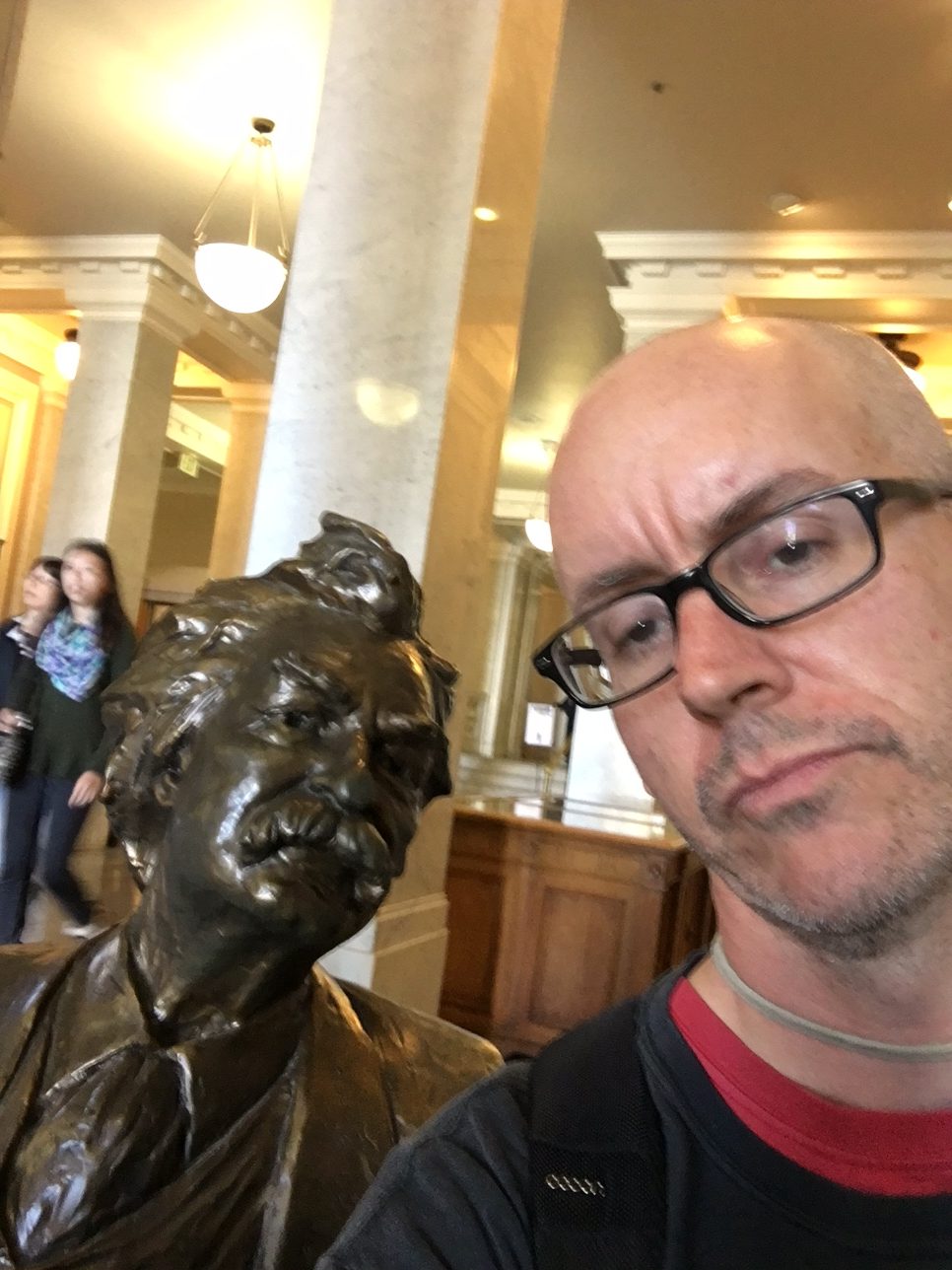
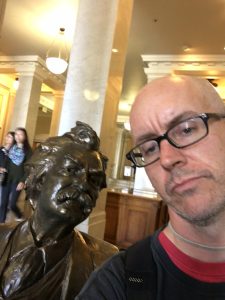
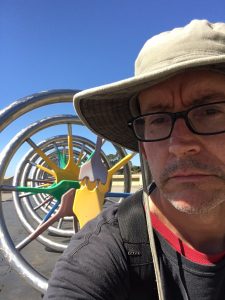
How it goes terribly wrong when middle-aged people take selfies:
As my briefcase was bursting with books already, I beat a hasty retreat. Sitting outside, I ate some more bread from the Cheese Board folks. If I were broke, I could have survived all day on these rolls.
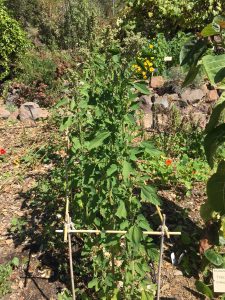
Then I started walking. And walking. And walking. Made my way to the utterly brilliant Berkeley Botanical Garden. While I was disappointed that some couple had elected to get married — no Redwood Grove — it was really cool to look at the display of crops and then walk to the greenhouse (and up another hill!) to see the actual plants growing. I’d not seen a coffee tree or a cacao bean tree. (I will note that their chard was as consumed by leaf miners as mine is…)
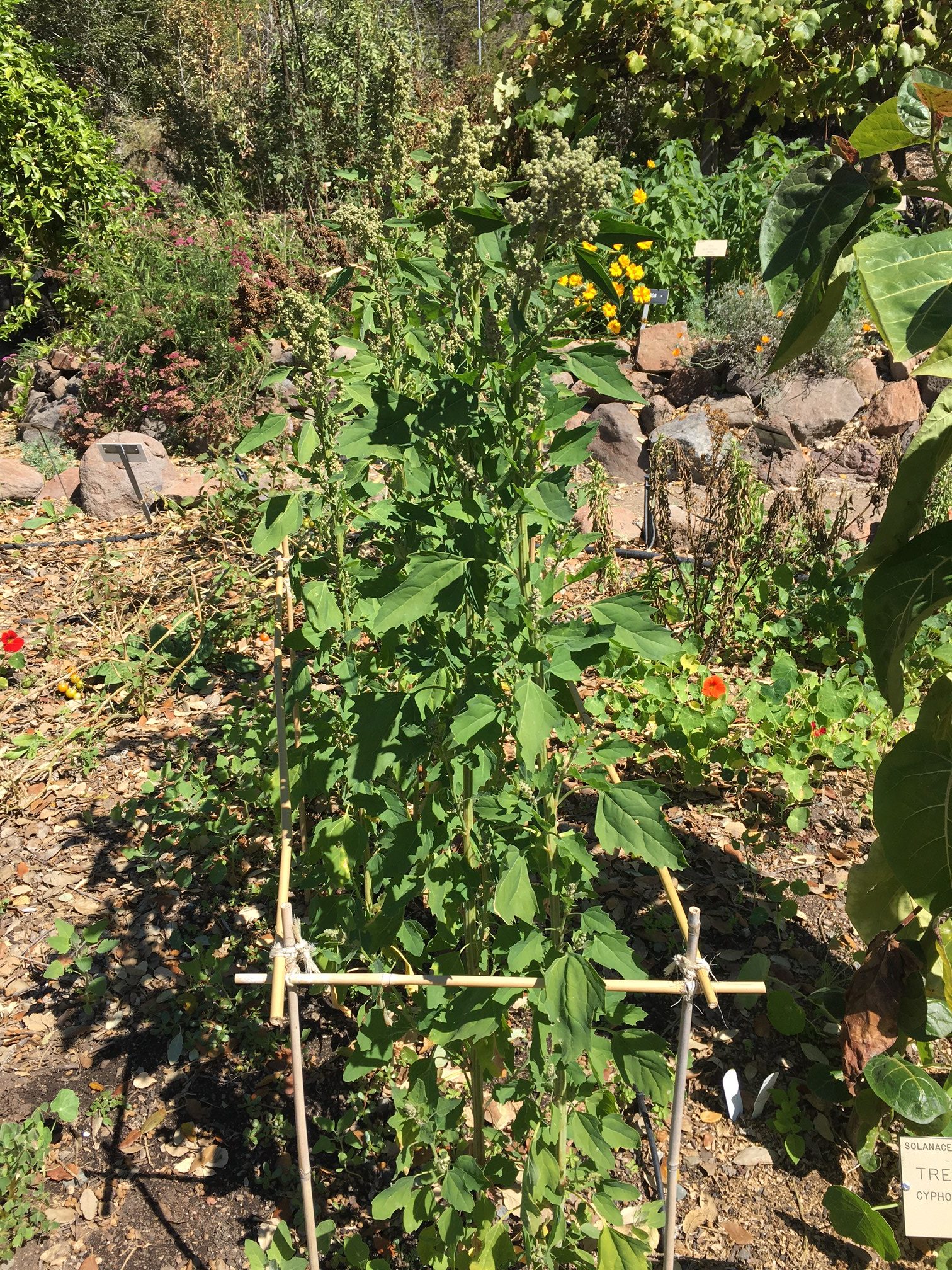
Quinoa growing
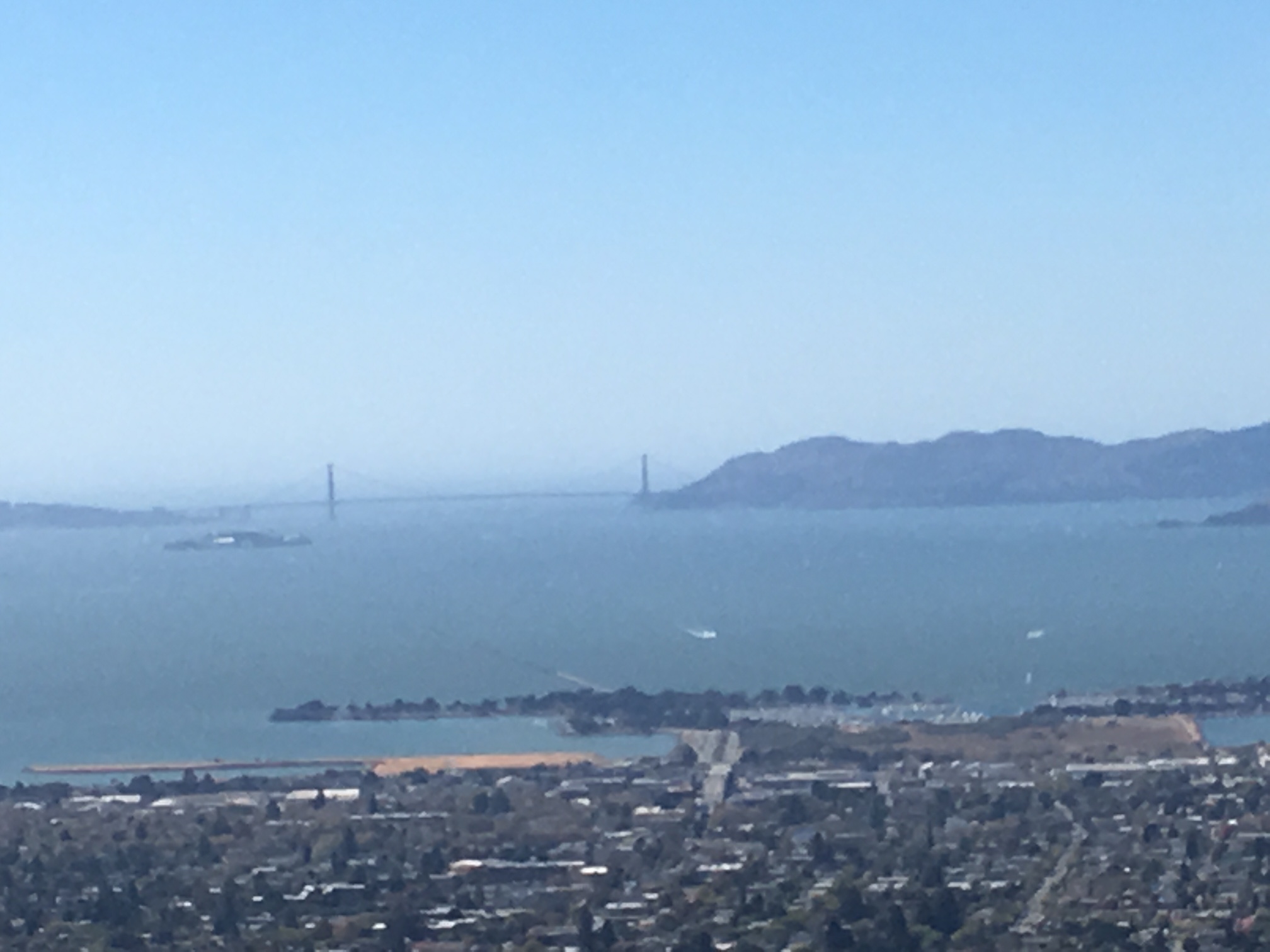
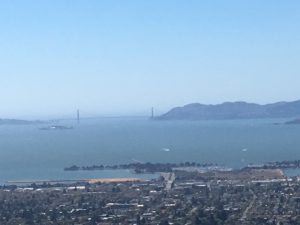
Despite the advice of the young man at the door, I continued walking up the hill (no sidewalk) to the Lawrence Science Building. This view… sigh. There’s a reason people live in Northern California.
Here’s the giant DNA model that I want to build with my students:
For some reason, I didn’t have cell phone service, so no uber. I couldn’t face walking down the way I came and it seemed clear from the fencing that if I couldn’t hike down, that I’d have a long walk up another hill. So I got on the Berkeley parking shuttle, which was taking folks down to the Berkeley-Utah game. Let’s be clear — there’s nothing in my experience that would prepare me for big time college football — but driving down with the super polite Berkeley alums was fun. Better yet, the bus driver showed me a back path so I could avoid walking into the stadium.
This path did put me on the road through the fraternity-sorority party zone. Scarily impressive. Thanks to the kind young women selling bottles of water who pointed me towards Bancroft Street. Got the kids shirts and winter hats, got the wife a cap too.
Hungry and always in search of the best Pad Thai, I picked the most crowded Thai place I could find and chowed down.
Stomach full, I wound towards the legendary Moe’s. Note to the people at the cleverly named “Mad Monk Center for Anachronistic Media”: why would I give you my laptop bag with pretty much everything important I own in it? Why wasn’t my offer to let you search it on the way out enough? Considering I’m the demographic you want — middle aged white dude with both cash and real credit cards — you might rethink this.
Anyway, Moe’s was everything it was supposed to be. There was first edition of Bound for Glory I coveted. A hardback of the first Foundation book. A battered first edition of 1984. (I paid less for one in better condition!)
Got three books. Joel Salatin’s book, Folks This Ain’t Normal, for $7. Another Wendell Berry collection of essays for $8. And paperback copy of Why Busing Failed, which I was wondering why they had three copies of in mint condition until I realized it was a Uof C press book. Bad reviewers — selling that shit. Note: they also had a section of $2-3 paperbacks that I’ve filled one window sill with — old, thin paperbacks.
These folks were awesome. I spent much of my time reading the stuff on the walls, the stories of the store, the ways in which it had kept going in thin times, the continuation of a family business. Knowing I only had a few minutes left and knowing I just wanted to sit somewhere quiet and cool, they sent me to The Drunken Boat (Le Bateau Ivre). Here I had the best milkshake I’ve ever had — the Moki, with what felt like espresso and real chocolate — and two awesome waiters. One ended up giving me a ride to the BART (thank you sir!) and the other had, wait for it, LIVED ON MY BLOCK of Hazel Avenue, and had more than likely danced with my kids at their Halloween party.
Long ride to the airport for the first Red Eye of my life. In the airport now an they’ve already announced that this is a “100% full flight.” Should be interesting.
My kids will never see Berkeley because there’s no way they would not want to go there. I guess we’ll have to move too.