Teacher Tenure

Solid article here by a teacher that covers a lot of ground. None of these issues are as simple as they seem and claiming that somehow teacher tenure produces inequality is illogical and a misreading of how schools actually operate.

I had never heard this before:

But U.S. education spending data includes teacher pensions, and teachers don’t get Social Security, so our pensions aren’t actually as generous as they seem.

Is that true? Really?

Update: Some California teachers do not pay into social security and therefore do not receive these benefits.

New Yorker Article

This is an amazing article.

This quote is money:

“The people who say poverty is no excuse for low performance are now using teacher accountability as an excuse for doing nothing about poverty.”

(David Berliner has been singing this song for a long time, having first published The Manufactured Crisis in 1996 !?!)

The only thing that bothered me, even if didn’t surprise me, was that a school like this could be poked and prodded by so many different individuals and have so many different individuals miss the cheating.

Tim’s Bookstore in Hyannis

Part of summer vacation is visiting used bookstores. Found this place two years ago and returned today:

*Solid education section, with good histories as well as a number of good teacher books. I bought a $4 copy of Louis Menand’s book on universities (Louis Menand, The Marketplace of Ideas: Reform and Resistance in the American University, (New York: W. W. Norton & Company, 2010).

*Good literary criticism and poetry sections too. I liked his novels so for $4 I bought this hardback collection of essays: 1. J. M. Coetzee, Stranger Shores: Literary Essays 1986-1999 (New York: Viking Adult, 2001).

Many fine dictionaries in good shape that I would buy for school if I didn’t have to drive them home and lots of fiction. If I lived here all summer, I’d be in and out of this store.

Knowing when

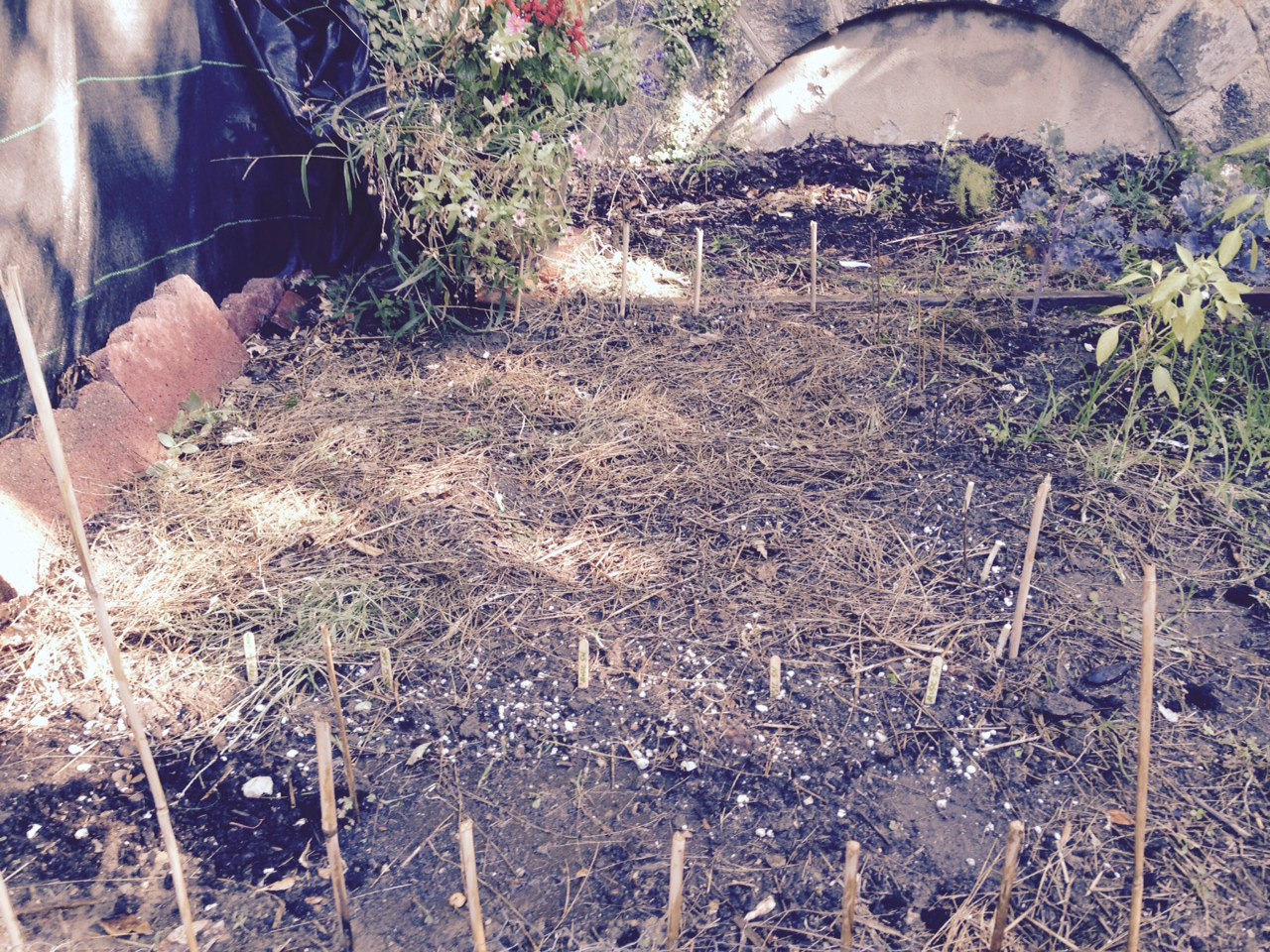
One thing I’ve been thinking a lot about as I try and grow as a gardener is knowing when a plant is ready. What do you look for? How do you know that something is ready to bolt?

I’ve blown it with the broccoli. What I know now is that the moment the heads show any sign of splitting apart, you need to harvest. The seeds are pretty and plentiful but the heads are inedible.

I’ve blown it with the arugula. These germinate so well and transplant so well that I thought I didn’t have to pay them much mind. Boom — beautiful flowers and bitter greens. These I’ll just know to get when the leaves are smaller.

It’s like cooking though. How many years did it take me to learn to pull burgers before they were hockey pucks? How many years before I could trust my read of the heat of the coals and the time necessary to cook a fat burger all the way through?

False distinctions

Reading this wonderful book and I’m struck by how many academic disciplines had to cooperate in order for photosynthesis to be understood.

The text makes me want to study biology, chemistry, physics, as well as some of the practical elements of each (how do you build the right machine for the right experiment). My question is this, though: can you do interdisciplinary work without having any basic background knowledge? In other words, I can read this book having taken good bio, chem, and physics classes thirty years ago. I know what an atom is, I know that there are different components to an atom; I know that different elements can combine and I know that carbon forms different sorts of links; I have a basic understanding of photosynthesis.

What if I didn’t have that basic information? Would I still be able to understand this text? How motivated would I have to be to keep reading it? What kind of support would I need to really come to terms with all of the different information contained in a book like this?

It’s a larger philosophical issue of doing interdisciplinary, project-based work, I think: how much can we ask of kids who may have minimal academic background? How much academic background is necessary?

1. Oliver Morton, Eating the Sun: How Plants Power the Planet (New York, NY: Harper, 2008).

Redeployment

Reading and loving this collection of short stories. “Money as a weapons system” is about midway through the book; early in the story comes this line:

“It wasn’t my idea,” said Bob, “We remade the Ministry of Agriculture on free market principles, but the invisible hand of the market started planting IEDs.”

Catch-22 laugh-out-loud funny for the rest of the story. World class critique of institutions and how they move forward with no understanding of context or impact.

Phil Klay, Redeployment, (New York: Penguin Press,2014).